
Affordable Shipping Options That Save Your Margins
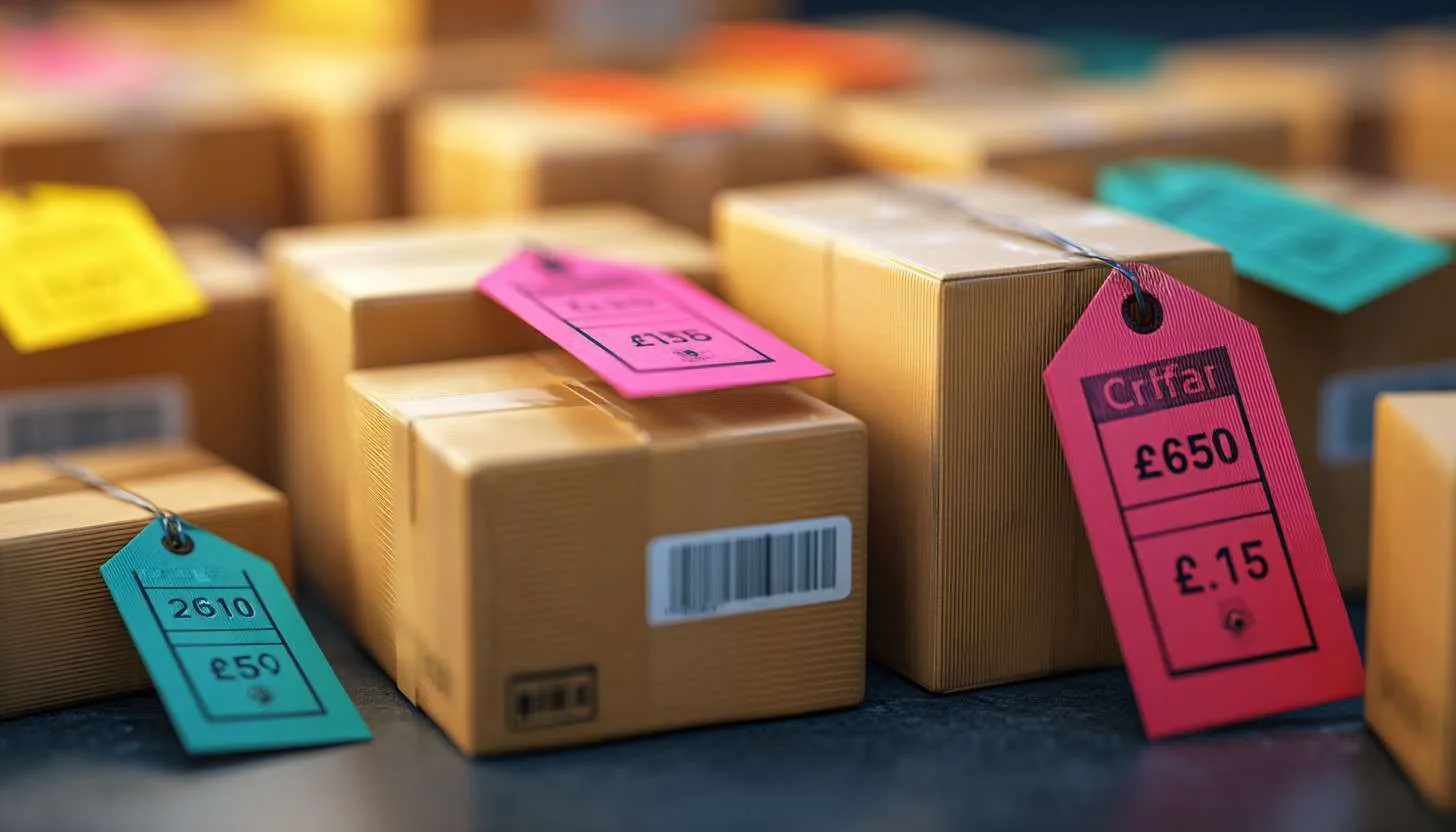
Shipping costs are quietly draining the profits of thousands of online businesses every single day. Many store owners discover too late that a product with strong margins becomes barely profitable once fulfillment is factored in. Understanding affordable shipping options is no longer just practical knowledge; it is a survival skill for anyone serious about eCommerce.
Why Shipping Costs Are a Silent Business Killer
The average online shopper abandons a cart the moment unexpected delivery fees appear at checkout. Research from the Baymard Institute has consistently found that high shipping costs are the single leading cause of cart abandonment globally. This means your shipping strategy is directly influencing your conversion rate, not only your expense line.
Many new entrepreneurs underestimate how deeply carrier pricing structures are layered. Dimensional weight pricing, residential surcharges, and fuel adjustments can push a seemingly simple shipment well above its expected cost. Learning how these pricing mechanisms work is the first and most important step toward finding genuinely affordable shipping options.
Your chosen business model will also define how much shipping flexibility you actually have. If you are operating a dropshipping business, your supplier’s carrier agreements will heavily shape your fulfillment costs. Reviewing starting a dropshipping store is worth doing before you lock in a supplier relationship, as shipping terms matter just as much as product pricing.
Understanding the Major Carriers and Their True Costs
USPS, UPS, FedEx, and DHL remain the four dominant carriers for North American and international shipments. Each has a specific strength: USPS is generally the most cost-effective option for lightweight domestic packages under one pound. UPS and FedEx tend to be more competitive for heavier commercial shipments moving across longer distances.
USPS Ground Advantage, which replaced First Class Package and Parcel Select Ground in 2023, is now one of the most cost-effective tracked services available for small parcels. Flat Rate Priority Mail boxes allow shipping of items up to 70 pounds for a fixed fee, regardless of destination within the United States. Many sellers never fully explore these options before defaulting to more expensive carrier agreements.
Regional carriers such as OnTrac, LSO, and Spee-Dee Delivery often undercut national carriers within their geographic service zones by 20 to 40 percent. They are a compelling alternative if your customer base is concentrated in specific regions. Mapping your order destinations by zone can reveal surprising savings opportunities that no single carrier offers on its own.
Top Affordable Shipping Options for Online Sellers
Choosing the right shipping method depends on your package weight, required delivery speed, and destination. Here are the most reliable and cost-effective options available to online sellers today:
- USPS Ground Advantage: A flat-rate, trackable service for packages up to 70 lbs, replacing First Class Package and Parcel Select Ground in 2023. Excellent for lightweight domestic shipments.
- UPS Simple Rate: A dimensional-weight-free pricing structure for packages that fit into specific box sizes. Ideal for businesses with consistent packaging profiles.
- FedEx One Rate: Fixed pricing for packages that fit into FedEx-branded packaging, with no dimensional weight surprises at checkout.
- Pirateship: A free shipping platform that unlocks deeply discounted USPS and UPS rates for small businesses without a monthly fee or volume minimums.
- EasyPost API: A multi-carrier shipping platform that compares rates across dozens of carriers in real time, enabling automated and smarter shipping decisions at scale.
- ShipBob Fulfillment Network: A third-party logistics provider that negotiates bulk carrier rates and passes savings to merchants, particularly useful for growing brands.
- Regional Carriers (OnTrac, LSO, Spee-Dee): Often 20 to 40 percent cheaper than national carriers for shipments within their defined service zones.
Testing two or three of these options simultaneously is a practical way to identify the best match for your store. Your decision should align with your order volume, product weight profile, and customer delivery expectations. Do not assume one carrier will outperform another without running real comparisons on your actual shipment data.
How to Negotiate Better Carrier Rates
Most business owners do not realize that carrier rates are negotiable, especially once consistent monthly shipping volumes are established. UPS and FedEx both maintain tiered discount programs based on weekly spending thresholds. Even a modest $500 per week in shipments can unlock meaningful percentage discounts off published retail rates.
To negotiate effectively, you need to come prepared with data that tells a clear story. Bring your average package weight, monthly volume, and zone distribution to the carrier conversation. Carriers respond to predictable, repeatable business, and they are far more willing to offer custom pricing when they can see it.
Third-party logistics consultants can also negotiate carrier agreements on your behalf, taking a commission only when they successfully secure savings. This makes them a low-risk option for businesses that lack the bandwidth to manage carrier relationships directly. Savings from negotiation can fund other growth areas, including eCommerce site optimization that improves your overall store performance.
Using Technology to Lower Your Shipping Costs
Shipping software has matured into one of the most accessible and highest-return tools available for cost reduction. Platforms like ShipStation, Shippo, and EasyPost connect to multiple carriers and automatically surface the lowest rate for each shipment. This removes guesswork from carrier selection and eliminates the risk of repeatedly overpaying on high-volume days.
Automation rules within these platforms allow you to configure precise conditions for carrier selection without manual intervention. If a package weighs under 16 ounces and ships domestically, for instance, the system can always default to USPS Ground Advantage. Over thousands of shipments, this kind of automated decision-making compounds into substantial cost savings.
AI-powered tools are also entering the logistics space and influencing how shipping decisions are made at a data level. You can explore a curated list of AI tools that are reshaping areas from inventory forecasting to carrier selection. When combined with strong SEO for online shops, smarter shipping infrastructure builds a more profitable operation from the ground up.
The Free Shipping Strategy That Actually Works
Offering free shipping is one of the most effective conversion tactics in eCommerce, but it requires a clear and deliberate financial strategy. The most common approach is to build the shipping cost into the product price and present delivery as complimentary. A product listed at $22 with free shipping frequently converts better than the same product at $18 with a $4 shipping fee.
Minimum order thresholds for free shipping are another effective approach that benefits both the customer and the business. Setting the threshold slightly above your current average order value encourages shoppers to add one more item to qualify. This improves your shipping economics while simultaneously increasing the average revenue per transaction.
Your platform choice matters here, and reviewing an eCommerce solutions comparison will clarify which platforms handle conditional free shipping rules most effectively. Some platforms support rule-based shipping logic natively, while others require workarounds or third-party apps. Pairing this with the best online payment gateways ensures a smooth checkout experience that does not erode the trust built by your free shipping offer.
International Shipping Without the Premium Price Tag
Shipping internationally does not have to mean choosing between expensive express services and unreliable untracked postal routes. USPS First Class Package International remains one of the most affordable tracked options for lightweight parcels heading overseas. For higher-value goods, USPS Priority Mail International and FedEx International Economy offer stronger coverage at reasonable price points.
Duties and taxes represent a separate layer that directly shapes the international customer’s experience. Tools like Zonos and Avalara calculate landed costs at checkout, preventing surprise customs charges from deterring buyers after a purchase decision has already been made. Transparent pricing at checkout builds trust and measurably reduces international order cancellation rates.
If international sales are a meaningful portion of your business, reviewing your types of eCommerce business models is a worthwhile exercise. Certain models, particularly those covered in the B2B vs B2C eCommerce space, include volume commitments that unlock preferential international freight rates. Aligning your shipping infrastructure with your business model unlocks efficiencies that a purely transactional approach consistently misses.
Packaging as a Cost-Reduction Lever
The box you use is often as expensive as the shipping label itself, and it is consistently one of the most overlooked areas of fulfillment cost. Oversized packaging increases dimensional weight, which is the carrier’s method of charging for the cubic space a package occupies rather than its actual mass. Right-sizing packaging for each product type is one of the simplest and highest-return changes any seller can make.
Poly mailers, bubble mailers, and lightweight padded envelopes are significantly cheaper to ship than rigid boxes of similar external dimensions. For non-fragile items, switching from a box to a mailer can reduce per-shipment cost by 30 to 50 percent. This single change can transform the economics of products that were previously unprofitable to sell online.
If your store operates on a recurring delivery model, packaging optimization becomes a strategic priority rather than an optional improvement. Businesses using a subscription-based eCommerce model ship consistently and at scale, making every packaging decision a high-leverage variable. Investing in custom-sized inserts and right-fit boxes pays dividends across every single fulfillment cycle.
Building a Shipping Strategy That Scales With You
Affordable shipping options are not a fixed solution you implement once and forget. They are a dynamic system that requires regular review as your order volume, carrier relationships, and product mix evolve. The businesses that win on fulfillment are the ones that treat shipping as a strategic function with measurable outcomes.
Understanding the full scope of online retail advantages includes recognizing that logistics efficiency is one of the clearest competitive differentiators available to online brands today. Combining smart carrier selection, negotiated rates, automation, and packaging discipline into one cohesive system turns shipping from a cost center into a genuine advantage. If you are just getting started or rebuilding your store’s foundation, top online store builders can help you launch on a platform that supports this kind of sophisticated fulfillment logic from day one.
Review your current shipping setup on a quarterly basis, test new carriers and tools regularly, and let your actual data guide every decision you make. The sellers who continuously optimize their shipping strategy consistently outperform those who treat fulfillment as an afterthought. In a market where margins are thinning and customer expectations are rising, your shipping decisions may matter more than you think.
Related Articles

Unlocking QVC Blogs: Your Ultimate Guide to Shopping Insights
In the ever-evolving landscape of online shopping, QVC blogs have emerged as invaluable resources for both seasoned shoppers and newcomers alike. These blogs…
Read more
What Agentic Commerce Examples Are Disrupting Retail?
Agentic commerce is reshaping online retail through AI systems that act on behalf of consumers. Discover real-world examples and how businesses can adapt.
Read more
What Are the Best Unique Merchandise Ideas to Sell?
Selling the same products as everyone else limits your growth. Unique merchandise ideas help you capture attention and build a brand. Creativity can turn simple…
Read more