
7 Best AI Novel Writing Software & Story Generator Tools

The best AI novel writing software can transform your creative process, helping you overcome writer’s block, develop compelling characters, and structure engaging narratives. Whether you’re crafting your first novel or you’re a seasoned author looking to streamline your workflow, AI story generator tools offer innovative solutions that complement your creativity rather than replace it.
In this comprehensive guide, we’ll explore seven powerful AI writing tools that can help bring your literary visions to life. From complete novel writing platforms to specialized tools for plot development and character creation, these solutions represent the cutting edge of AI-assisted storytelling.
Why Use AI for Novel Writing?
Before diving into specific tools, it’s worth understanding why thousands of authors are incorporating AI into their writing process. According to recent data, approximately 45% of surveyed authors are already using some form of generative AI, whether for writing, marketing, or other aspects of their publishing journey. AI writing assistants aren’t replacing human creativity—they’re enhancing it by handling repetitive tasks and providing creative inspiration when you need it most.
AI writing tools excel at:
- Generating fresh ideas when you’re stuck in a creative rut
- Maintaining consistency across characters, settings, and plot points
- Speeding up drafting so you can focus on refinement and polish
- Providing alternative perspectives on scenes and dialogue
- Organizing complex storylines with multiple characters and subplots
The 7 Best AI Novel Writing Tools
#1: Aivolut Books
When it comes to comprehensive AI-powered novel writing, Aivolut Books stands out as our top recommendation. This platform offers an end-to-end solution for authors at every stage of the writing journey.

Key Features:
- Intelligent story generation that adapts to your writing style
- Character development tools with personality consistency tracking
- Scene-by-scene plotting assistance
- AI-generated book covers
- Amazon KDP-ready formatting
- Chapter illustrations (Pro plan)
- Export options in multiple formats
Pricing:
- Lifetime Basic: 60 credits/month, up to 2 short books (10,000 words each), nonfiction only
- Lifetime Starter: 150 credits/month, up to 5 short books (10,000 words each), nonfiction only
- Lifetime Pro: $497 – 600 credits/month, up to 20 short books or 6 medium books (30,000 words each), fiction and nonfiction
- 14-day money-back guarantee
Pros:
- Purpose-built platform for book writing
- One-time lifetime payment (no recurring fees)
- Amazon KDP-ready formatting included
- AI-generated book covers
- 100% ownership of generated content
- Dedicated customer support
Cons:
- Fiction writing only on Pro plan
- Word count limits based on credit system
Best For: Authors who want an all-in-one solution specifically designed for book publishing, especially on Amazon Kindle.
#2: Sudowrite
Sudowrite has gained a loyal following among fiction writers for its creative approach to AI assistance. Rather than simply generating text, it focuses on enhancing your existing prose and helping you explore narrative possibilities.

Key Features:
- “Describe” function that adds sensory details
- “Twist” feature for plot developments
- Character brainstorming tools
- Tone and style matching
Pricing:
- Hobby & Student: $10/month
- Professional: $25/month
- Max: $100/month
Pros:
- Designed specifically for fiction writers
- Enhances rather than replaces your writing
- Creative feature set
- Strong community support
Cons:
- Monthly subscription required
- Can be expensive for heavy users
- Less suitable for nonfiction
Best For: Fiction writers who want AI to enhance their writing style rather than generate from scratch.
#3: NovelAI
NovelAI specializes in long-form storytelling with a focus on maintaining consistency across lengthy narratives. Its memory system keeps track of plot points, characters, and world-building details throughout your entire novel.
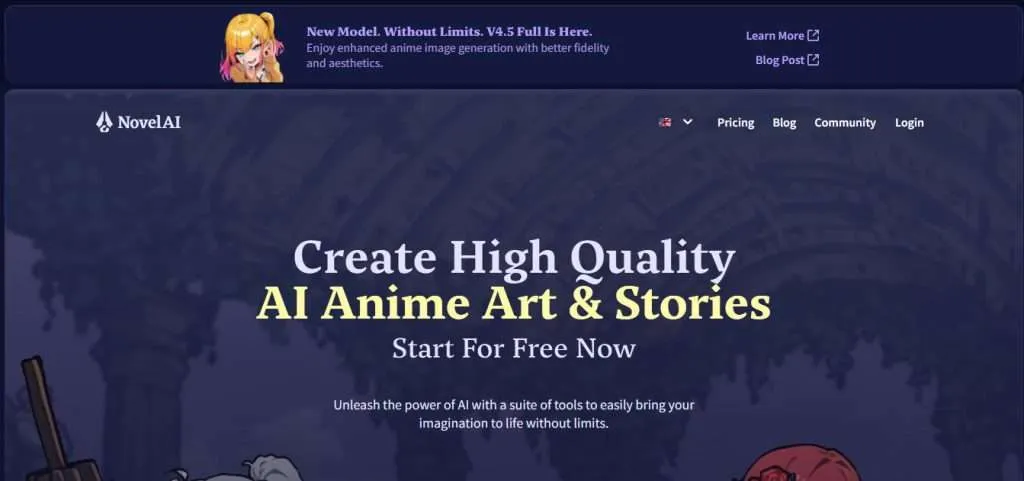
Key Features:
- Advanced memory and lore systems
- Multiple AI models for different genres
- Image generation for visualization
- Module training for genre-specific writing
Pricing:
- Tablet: $10/month
- Scroll: $15/month
- Opus: $25/month
Pros:
- Excellent for complex world-building
- Strong memory system
- Image generation included
- Good for series writing
Cons:
- Learning curve for advanced features
- Interface can be overwhelming
- Best suited for fantasy/sci-fi
Best For: Authors working on complex fantasy, sci-fi, or series novels requiring extensive world-building.
#4: Jasper AI
While Jasper started as a marketing copywriting tool, its “Boss Mode” has become increasingly popular with novelists. It offers versatility and powerful language generation capabilities.

Key Features:
- Long-form content creation
- Multiple tone and style presets
- Template library
- Grammar checking integration
Pricing:
- Creator: $49/month
- Pro: $69/month
- Business: Custom pricing
Pros:
- Versatile for fiction and nonfiction
- Strong content generation
- Professional features
- Regular updates
Cons:
- Expensive compared to alternatives
- Not specifically designed for novels
- Better for shorter content
Best For: Writers who need flexibility to work on both fiction and non-fiction projects.
#5: Writesonic
Writesonic provides an affordable entry point into AI-assisted novel writing with a generous free tier and straightforward interface.

Key Features:
- Story plot generator
- Character backstory creation
- Dialogue enhancement
- Chapter outlining tools
Pricing:
- Free: Limited usage
- Chatsonic: $12/month
- Individual: $16/month
- Standard: $79/month
Pros:
- Affordable pricing
- Free tier available
- User-friendly interface
- Good for beginners
Cons:
- Limited advanced features
- Generic outputs
- Better for short content
Best For: Beginning writers and those on a budget who want to experiment with AI writing tools.
#6: Rytr
Rytr offers a straightforward approach to AI writing with specific use cases for creative fiction, including story outlines and creative writing prompts.

Key Features:
- 20+ tone options
- Story idea generator
- Chapter writing assistance
- Built-in plagiarism checker
Pricing:
- Free: 10,000 characters/month
- Saver: $9/month
- Unlimited: $29/month
Pros:
- Very affordable
- Simple interface
- Quick setup
- Good for short stories
Cons:
- Limited features for novels
- Basic AI capabilities
- Character limits restrictive
Best For: Writers who prefer a simple, no-frills interface for shorter projects.
#7: Copy.ai
Copy.ai has expanded beyond marketing copy to include creative writing features that help authors overcome common storytelling challenges.

Key Features:
- Story starter templates
- Character description generator
- Scene setting creation
- Conflict brainstorming
Pricing:
- Free: 2,000 words/month
- Pro: $49/month
- Team: $249/month
Pros:
- Good for brainstorming
- Template variety
- Easy to use
- Quick results
Cons:
- Not designed for long-form fiction
- Expensive for novel writing
- Limited narrative understanding
Best For: Writers looking for quick inspiration and starting points for their stories.
How to Choose the Right AI Novel Writing Tool
Selecting the best AI writing software depends on your specific needs, writing style, and budget. Here are key factors to consider:
Consider Your Genre and Style
Different tools excel at different types of writing. If you’re working on fan fiction or genre-specific content, look for platforms that understand those conventions. For traditional novel writing with AI, tools with strong narrative structure understanding like Aivolut Books are ideal.
Evaluate Your Budget
Monthly subscriptions seem affordable at $20/month, but over 2-3 years, that’s $480-$720. Compare this to one-time lifetime purchases like Aivolut Books, which may cost more upfront but eliminate recurring fees. For serious authors planning multiple books, lifetime deals often provide better long-term value.
Assess Platform Integration
The best workflow includes multiple tools working together. Consider how your chosen AI writing tool integrates with other aspects of your process, from content idea generation to final AI book formatting.
Maximizing Your Results with AI Writing Tools
Simply having access to AI novel writing software isn’t enough—you need to use it effectively. Here’s how to get the most from these powerful tools:
Start with Strong Foundations
AI works best when you provide clear direction. Begin with a solid AI book outline that establishes your story’s core elements: characters, setting, conflict, and themes. The clearer your foundation, the better your AI assistant can help build upon it.
Use AI as a Collaboration Partner
Think of AI tools as co-writers rather than ghostwriters. Research from Harvard Business Review shows that generative AI offers significant opportunities to augment human creativity rather than replace it. Generate multiple options for scenes or dialogue, then select and refine the elements that resonate with your vision. Many successful authors use an AI fiction writer as a collaboration partner, maintaining their creative voice while leveraging AI’s capabilities.
Leverage AI for Specific Challenges
Different phases of writing present different obstacles. Use AI strategically:
- Planning phase: Generate character profiles, world-building details, and plot structures
- Drafting phase: Overcome writer’s block with scene suggestions and dialogue options
- Revision phase: Identify pacing issues and inconsistencies
- Creative moments: Try an AI plot twist generator when your story needs unexpected developments
Maintain Your Unique Voice
The most successful AI-assisted authors use these tools to enhance their voice, not replace it. According to research published in Science Advances, while AI can make individual stories more creative and better written, especially for less experienced writers, maintaining human oversight ensures your unique perspective shines through. Always review and revise AI-generated content to ensure it aligns with your style, tone, and vision.
Streamline Your Complete Writing Workflow
Beyond the initial drafting phase, consider how AI can support your entire publishing journey:
- Pre-writing: Use AI book outline generators to structure your story
- Writing: Leverage AI book writing generators for efficient drafting
- Post-writing: Simplify formatting with AI book formatting tools
This integrated approach ensures consistency and efficiency throughout your creative process. If you’re exploring various AI solutions, check out our directory of AI applications to find complementary tools. Many authors also benefit from exploring the best novel writing tools to find the perfect combination for their process.
Common Concerns About AI Novel Writing
Will AI Make My Writing Sound Generic?
Not if you use it properly. AI tools generate raw material that requires your editorial judgment and unique voice. Studies show that while AI-enabled stories are often evaluated as more creative and better written, they can become more similar to each other without human refinement. The key is using AI suggestions as inspiration rather than final copy.
Is AI-Assisted Writing Ethical?
Most publishers and readers accept AI as a writing tool (similar to spell-checkers or grammar assistants), but expect the creative vision and final decisions to come from the human author. With Aivolut Books, you fully own the rights to books generated, giving you complete control over your work.
Can AI Write an Entire Novel?
Technically yes, but research from Science demonstrates that humans still significantly outscore AI in creative writing, with humans outperforming AI by about 80% in poetry and 100% in novels. The best approach combines AI’s efficiency with human creativity, using AI tools as collaborators rather than replacements.
Ready to Start Writing Your Novel?
The best AI novel writing software empowers you to write more efficiently without sacrificing creativity. Aivolut Books stands out as the top choice with its comprehensive features, lifetime pricing, and purpose-built platform for book authors.
These tools aren’t about replacing the human element in storytelling—they’re about removing obstacles that prevent you from sharing your stories with the world. By handling technical challenges and providing creative inspiration when you need it most, AI writing assistants let you focus on what matters: crafting compelling narratives that resonate with readers.
Start exploring Aivolut Books today and discover how AI can transform your writing journey. Your next great novel is waiting to be written.
Related Articles

Best AI Presentation & Slideshow Makers 2026
Creating polished presentations no longer takes hours. Discover the best AI presentation and slideshow makers transforming 2026 workflows.
Read more
Best AI Storytelling & Screenwriting Tools 2026
Want to write stories and scripts faster without losing creativity? Explore the best AI storytelling and screenwriting tools shaping 2026.
Read more
Best AI Tools for Academic Research & Study This 2026
The best AI tools for academic research & study are transforming how students learn and scholars conduct investigations. From organizing sources to analyzi…
Read more