
Character AI Ad Tools Compared: Features, Costs, and Creative Output
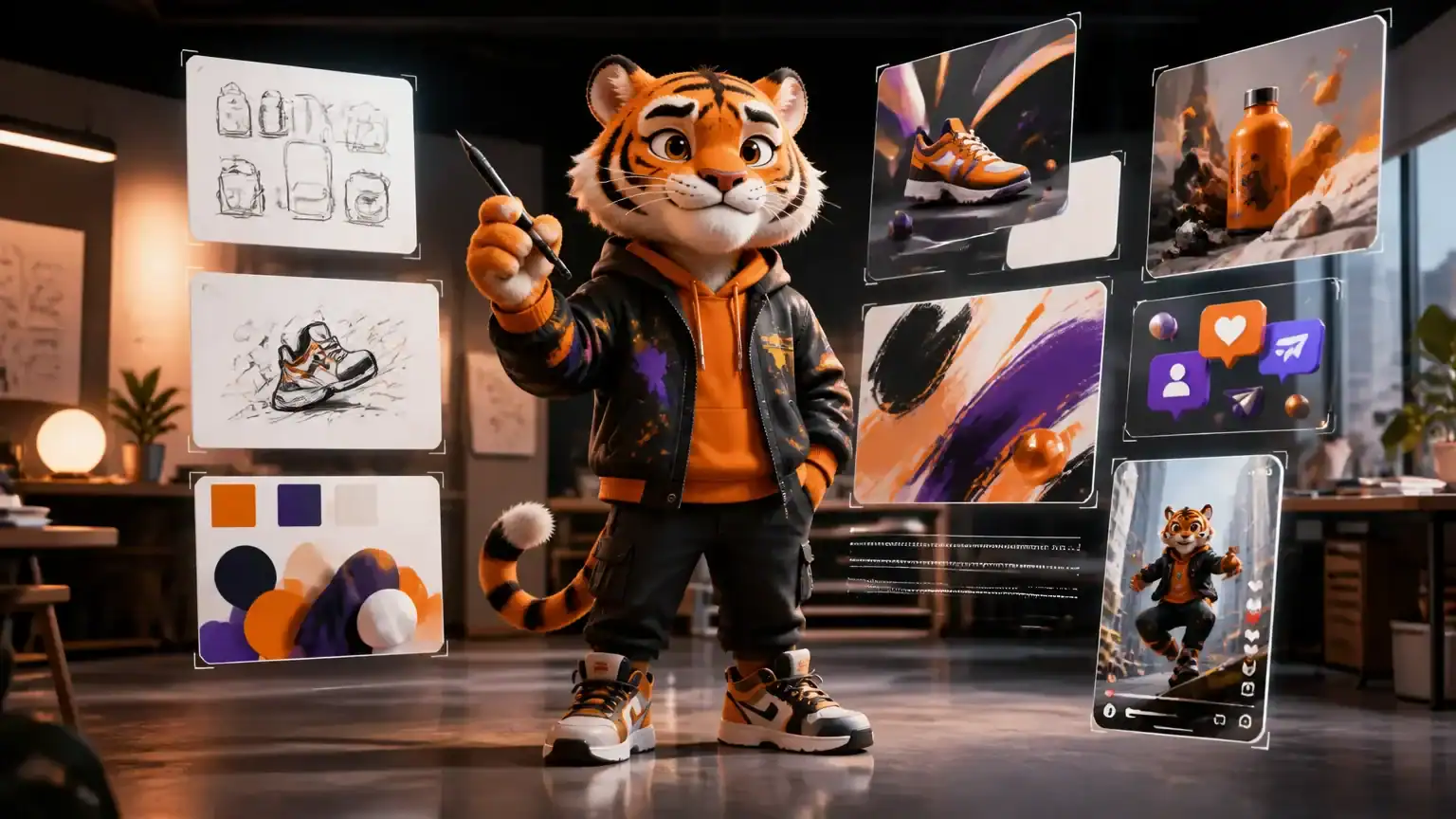
A character AI ad can go from rough idea to campaign-ready concept in minutes. But speed only matters when the result feels on-brand, reusable, and suitable for real campaigns—not like a digital mascot that wandered in from another universe.
This comparison looks at Character AI ad tools as practical creative systems. They can help generate branded characters, campaign concepts, ad copy, visuals, social posts, and short-form video assets. Some focus on images, while others support complete workflows from character development to finished ad concepts.
The term “character AI” covers several categories. It may mean a character image generator, an AI avatar platform, a conversational persona, or a broader creative tool with character-focused features. Here, the comparison focuses on tools that help turn a character into usable marketing creative.
That means image quality is only one piece of the puzzle. We also examine features, pricing, workflow fit, character consistency, commercial usability, and the level of control available to teams. A stunning image is helpful, but a consistent character that can appear across ten ads is far more valuable.
For example, a small business may need quick product visuals without hiring a full production crew. An agency may prioritize batch creation, brand controls, and client-ready exports. A social team might care more about short-form concepts, captions, and fast experimentation.
There is no universal winner hiding at the end of the comparison, wearing a tiny crown. The right choice depends on campaign goals, production volume, team skills, and creative control. We’ll also point you toward an AI tools directory when you want to explore related options beyond this shortlist.
What Are Character AI Ad Tools and How Do They Work?
Character AI ad tools use generative AI to create, reuse, and adapt fictional or branded characters across marketing campaigns. Think of them as a creative studio with an unusually tireless illustrator, copywriter, and storyboard artist. Some tools create a character once. Others support a repeatable campaign system that keeps the character recognizable across many ads and channels.
The process usually starts with a detailed brief. You provide brand guidelines, audience information, character personality, visual references, product details, offer, channel, format, and call to action. The tool then turns those inputs into creative assets, such as character portraits, product scenes, social posts, display ads, video concepts, scripts, voiceovers, or chatbot-style promotional experiences.
The creation method matters. Prompt-based generation produces images or copy from written instructions, making it flexible but sometimes unpredictable. Reference-image workflows use uploaded examples to guide the character’s appearance. Character-lock or identity-preservation features aim to keep facial features, clothing, and proportions consistent across outputs.
Template-driven ad production goes a step further. Instead of generating one impressive image, it combines a saved character, approved messaging, product data, and fixed layouts. This makes it easier to create campaign variations for different audiences, offers, and placements. For teams producing dozens of assets, that repeatability can matter more than a single spectacular portrait.
For example, a coffee brand might create “Milo,” a cheerful animated barista. A paid social ad shows Milo holding the featured roast with a “20% off” message. The landing-page hero places him beside the product and a “Shop now” button. An email shows Milo recommending the blend, while a retargeting ad reminds visitors that their discount is still waiting.
The technology still has rough edges. Hands may look inconsistent, logos can warp, and facial features may change between generations. Product packaging might contain inaccurate details, while typography often needs manual correction. Copy can also sound generic unless the brief includes a strong brand voice and clear creative direction.
That is why these tools work best as production partners, not autopilot. Human review remains essential for claims, trademarks, accessibility, pricing, and brand accuracy. Teams exploring the wider ecosystem may also compare independent publishing platforms when deciding where campaign content should live.
The Features That Matter Most for Advertising Work
Before comparing character AI ad tools, set a consistent evaluation framework. A flashy demo can hide awkward workflows, weak exports, or licensing gaps. Judge each platform across five areas: creative control, production efficiency, brand safety, collaboration, and campaign readiness.
Creative control starts with character consistency. Look for reference-image support, reusable character profiles, seed controls, and style locking. Strong tools should vary poses and facial expressions without changing the character’s identity. That matters when the same mascot appears in a vertical video, display banner, product page, and social carousel.
Test whether the tool can produce recognizable characters across formats and scenes. A character who looks like a cheerful chef in one ad but a distant cousin in the next may create more confusion than conversions. Controls for camera angle, wardrobe, lighting, pose, and expression help teams build a repeatable visual system.
Ad-specific controls separate useful platforms from image generators with a marketing hat. Check for aspect-ratio presets, safe-zone guides, product placement, text overlays, background removal, animation, lip-sync, subtitles, and high-quality exports. A tool that creates a beautiful image but crops the product logo is not campaign-ready. It is more like a talented intern who ignores the brief.
Copy and ideation features deserve the same scrutiny. Can the platform suggest hooks, headlines, primary text, scripts, and multiple creative variations? Better tools support audience-specific messaging, so a first-time buyer does not receive the same language as a loyal customer. Multiple-language support is also valuable, especially when it preserves meaning rather than translating word by word.
Workflow features determine whether a team can scale beyond one clever prototype. Look for project folders, brand kits, approval workflows, version history, shared workspaces, and batch generation. Integrations with design, advertising, storage, and analytics tools reduce manual handoffs. API access can also connect generation to larger content systems, though smaller teams may prefer a simpler interface.
Brand safety belongs in the comparison, not a footnote. Confirm commercial rights, data-training policies, privacy controls, moderation standards, and disclosure options. Teams should know whether uploaded faces, product images, and private campaign details are stored or used for training. Support quality matters too: clear documentation and responsive help can save a launch when an export fails at 4:55 p.m.
Finally, inspect real outputs at their intended size. Compare details, text readability, lip-sync accuracy, subtitle timing, and file quality across several variations. For visual inspiration beyond advertising, examples of AI art for book covers can also reveal how consistently a tool handles recurring characters and visual styles.
Comparing Character AI Ad Tool Categories
Character AI ad tools fall into several useful categories, and they solve different production problems. A general-purpose image generator may create a stunning hero image, while an ad platform produces 30 correctly sized variations before lunch. The prettier single asset is not always the better business decision.
General-Purpose Image Generators
These tools are strongest for visual exploration. Many now support character references, style guidance, image editing, and pose or scene variations. They work well for concept boards, social ads, product storytelling, and early creative tests.
Their main advantage is range. A team can place the same character in a supermarket, space station, or suspiciously stylish office without hiring a full production crew. Entry costs are often low, including free tiers or affordable monthly plans.
The trade-off is control. Character details may drift between generations, while text placement, product proportions, and ad layouts can require manual correction. These tools suit small businesses, designers, and creative teams that value experimentation over perfect repeatability. They typically offer low-to-moderate production volume, depending on how much cleanup each image needs.
All-in-One Ad Creative Platforms
All-in-one platforms prioritize throughput. They combine templates, resizing, copy variations, brand kits, asset libraries, and collaboration features in one workspace. That makes them useful for marketers producing campaigns across Meta, Google, TikTok, email, and display placements.
Their creative range may be narrower than a standalone image model. However, they usually provide stronger layout control and more dependable formatting. A marketer can generate several headlines, resize an ad for five placements, and keep colors and logos consistent without juggling six browser tabs.
These platforms are ideal for agencies, ecommerce teams, and performance marketers. Costs often use monthly subscriptions, seats, usage credits, or campaign limits. The learning curve is moderate, and production volume is high. If your goal is 30 usable campaign variations rather than one gallery-worthy image, this category often wins.
AI Avatar and Talking-Character Platforms
Avatar tools focus on scripted video. They usually provide text-to-speech, lip-sync, presenter avatars, subtitles, voice options, and localization into multiple languages. They suit explainer ads, product demonstrations, onboarding campaigns, testimonials, and presenter-style social videos.
They can turn a written script into a finished video quickly. This makes them especially useful when a brand needs frequent updates or localized versions. Teams already using AI tools for creative writing can pair those systems with avatar platforms to draft and produce scripts faster.
The weakness is performance quality. Some avatars still sound overly polished, repeat the same gestures, or deliver jokes with the warmth of a tax reminder. Costs may include subscriptions, rendering minutes, premium voices, or language packs. They require modest technical skill and can produce high video volume, but human review remains essential for pacing, pronunciation, and natural delivery.
3D, Mascot, and Custom-Character Systems
Custom-character systems offer the strongest brand ownership. A company can build a mascot or 3D character with defined proportions, wardrobe, materials, expressions, and environments. Once established, that character can appear consistently across ads, packaging, games, and social content.
This consistency comes at a price. Setup may require 3D modeling, rigging, animation, art direction, or specialist contractors. Costs can involve project fees, software licenses, asset development, and ongoing production support.
These systems suit established brands, entertainment companies, gaming studios, and businesses planning long-term character campaigns. Their learning curve is high, but they can deliver medium-to-high production volume after the initial investment. Think of them as building a small digital actor, not choosing a clever filter.
Conversational Character Tools
Conversational character tools are different from visual ad generators. They create interactive experiences, such as character-led chatbots, product guides, support assistants, and lead-qualification flows.
They are useful when the campaign needs dialogue rather than a finished image or video. For example, a travel brand might let users “ask” a mascot for destination ideas, while a software company uses a character to qualify leads. These tools can improve engagement, but they require careful scripting, guardrails, integration work, and monitoring.
| Category | Character consistency | Image or video output | Copy generation | Brand controls | Collaboration | Commercial use | Value for money |
|—|—|—|—|—|—|—|—|
| Image generators | Low to medium | Strong images | Limited to moderate | Moderate | Moderate | Usually plan-dependent | High for experimentation |
| All-in-one ad platforms | Medium to high | Images, video, formats | Strong | Strong | Strong | Usually business-ready | High for volume |
Character AI Ad Tool Costs: Plans, Credits, and Total Production Value
Pricing for a character AI ad tool rarely fits neatly into one monthly number. Many platforms offer free tiers, monthly subscriptions, credit-based generation, or per-seat plans. Others charge for API usage, rendering minutes, storage, premium models, or enterprise contracts.
The important question is not, “How many generations are included?” It is, “How many usable advertising assets will we receive?” A free plan may provide 100 generations, but failed renders, awkward hands, incorrect logos, rerolls, upscaling, and revisions can consume most of them. Video may also require separate credits, especially for longer durations, voice use, or higher resolutions.
Consider a campaign with one recurring character, 10 static ads, five short videos, three aspect ratios, and two revision rounds. Suppose character development takes 40 credits, each static concept requires four attempts at two credits, and each video needs three attempts at 15 credits. Add 30% for rerolls and quality fixes.
The estimate looks like this:
- Character development: 40 credits
- Static ads: 10 × 3 formats × 4 attempts × 2 credits = 240 credits
- Videos: 5 × 3 attempts × 15 credits = 225 credits
- Revisions, rerenders, and cleanup: roughly 150 credits
- Estimated total: 655 credits
If a $99 plan includes 500 credits, the campaign may actually require a second month or an add-on pack. That makes the effective cost about $198, before storage, voice, watermark removal, or premium-model fees. The spreadsheet may not be glamorous, but neither is discovering your budget has been eaten by a digital hamster.
Free and low-cost tools can work well for experimentation. Premium platforms often provide stronger commercial licensing, private generation, better character consistency, faster rendering, customer support, team permissions, approval workflows, and brand workspaces. Those features can reduce production time and legal uncertainty, even when the sticker price is higher.
Check whether pricing changes with resolution, video duration, image references, voice use, watermark removal, or additional brand workspaces. Also confirm whether revisions consume credits and whether unused credits expire. A low monthly price can become expensive when every usable variation requires another trip through the meter.
Before choosing an annual plan, run a short paid pilot. Test real campaign files, confidential product information, customer data handling, consistency across formats, and export quality. This reveals the tool’s total production value—and prevents a twelve-month subscription to an impressive demo that cannot survive Monday morning.
Evaluating Creative Output: Quality, Consistency, and Ad Performance
A polished demo proves very little. Evaluate each character AI ad across several generations, placements, and real campaign scenarios. Test close-ups, full-body poses, product interactions, diverse backgrounds, and seasonal variations. A character that looks brilliant in one studio portrait may develop mysterious extra fingers in a crowded holiday scene.
Next, check consistency across the complete campaign set. Compare the character’s face, clothing, proportions, personality, color palette, and recognizable brand cues. The audience should feel they are meeting the same spokesperson, not distant cousins who share a stylist.
Visual identity matters because characters help audiences follow a story. That is also why AI novel writing software and story generator tools focus on recurring characters and narrative continuity. Still, a memorable book-cover character is not automatically an effective advertiser. Treat storytelling examples as a bridge to identity, not as evidence of conversion performance.
Then judge advertising usefulness. Is the visual hierarchy clear? Can people read the text on a phone? Does the product look accurate? Does the first frame create interest, and does the composition remain safe for each platform? A visible call to action matters too. “Discover yours” may sound elegant, but “Shop the new waterproof travel bag” tells people what to do.
Review the copy with equal suspicion. Look for audience relevance, specific benefits, appropriate emotional tone, and claims the brand can support. Remove generic AI phrasing, exaggerated promises, and accidental compliance problems. “Revolutionary wellness solution” is usually less persuasive than a precise, verifiable benefit.
For a practical test, create several hooks and two or three character treatments. Keep the audience, offer, placement, run time, and budget controlled. Then compare attention, comprehension, click-through rate, conversion rate, and qualified actions. This small experiment reveals whether the character improves performance or merely earns compliments in the team chat.
Finally, use AI output as a starting point, not a replacement for creative direction. Editors should refine the script and visuals, while humans fact-check claims, review accessibility, confirm product details, and approve brand use. The strongest teams treat AI as a fast production partner—with supervision, guardrails, and occasional reminders that the mascot should not rewrite the legal disclaimer.
A Practical Workflow for Choosing and Using a Character AI Ad Tool
Start with one defined campaign objective. For example, a local bakery may want 20 short videos promoting weekend orders. Document the required deliverables, channels, formats, character roles, production volume, approval steps, and success metrics. Include targets such as cost per approved asset, click-through rate, conversion rate, or production time saved.
Next, create one standardized test brief for every shortlisted tool. Give each platform the same character description, product reference, audience, offer, visual direction, and ad copy request. If one tool receives a detailed brief while another gets three vague bullet points, your comparison becomes less scientific than choosing a mascot by astrological sign.
Score the results with a weighted rubric. Prioritize campaign usefulness and character consistency, then consider cost per approved asset, speed, editing ease, licensing, and team adoption. A visually stunning character AI ad is less valuable if it requires six hours of cleanup or cannot export the formats your platforms need.
Before producing at scale, build a reusable character bible. Record appearance rules, personality, vocabulary, prohibited claims, wardrobe guidance, expressions, poses, and brand colors. This gives creators a shared reference and helps the character remain recognizable across product launches, seasonal campaigns, and different ad sizes.
Add a human review process before anything goes live. Review factual accuracy, copyright and likeness concerns, regulated claims, accessibility, disclosure requirements, and final platform compliance. Check subtitles, contrast, product details, pricing, and pronunciation. AI can generate a charming spokesperson; it should not approve its own legal footnotes.
Finally, match the tool to your operating model. A solo creator may value low cost and simple editing. A local service business may need quick, reusable ads. Ecommerce brands benefit from product references and high-volume variants. Agencies need client approvals, licensing clarity, and reliable exports. Content-heavy startups should prioritize speed and consistency, while enterprise marketing teams need permissions, audit trails, security, and brand controls.
Run a short paid pilot before committing. Use real campaign files, test confidential information policies, compare multiple outputs, and measure approved assets—not just attractive demos. The best choice is the tool your team can use repeatedly, responsibly, and without summoning a production bottleneck in digital clothing.
Frequently Asked Questions About Character AI Ad Tools
Can character AI tools create complete ads, or only images?
It depends on the platform. Some tools generate character visuals only, while others add copy, layouts, voiceovers, video, captions, and export-ready variations. For example, an image generator may create a mascot portrait, while an all-in-one tool can turn that character into a finished social ad.
Are AI-generated character ads safe for commercial use?
They can be, but never assume safety by default. Check each tool’s licensing terms, model restrictions, training policies, likeness rights, trademark guidance, and advertising-platform rules. You should also review outputs for accidental brand similarities, celebrity likenesses, and unsupported claims.
How much should a small business budget?
Use a range based on your workload, not a magical universal price. Start with a low-cost plan for experimentation, then budget more for approved asset volume, video generation, extra seats, commercial rights, and editing support. A small team testing static ads may need far less than one producing weekly character AI ad videos.
Can AI keep the same character consistent across campaigns?
Reference images, character profiles, and identity-lock features improve consistency. However, they are not perfect cloning machines. Test several scenes, curate the strongest results, and expect occasional manual corrections to clothing, facial details, proportions, or brand colors.
Will AI-generated character ads outperform traditional ads?
Not automatically. Performance still depends on the offer, message-market fit, targeting, creative quality, and testing discipline. AI mainly increases the speed and breadth of experimentation, helping teams test more hooks and formats before the budget starts doing interpretive dance. Human review remains essential before anything goes live.
How to Choose the Right Character AI Ad Tool
There is no universal winner in the character AI ad market. Choose based on the output you need, production frequency, creative control, budget, and risk tolerance—not the tool with the flashiest demo.
Use general-purpose generators for early exploration and concept testing. Choose ad platforms for scalable variations across formats and audiences. Avatar tools fit presenter-led video, while custom character systems make sense for long-term brand ownership and consistency.
The strongest choice is the platform that repeatedly delivers approved, on-brand assets at a sustainable cost. A tool that creates one dazzling mascot but struggles with subtitles, product details, or export settings is less useful than a dependable workhorse.
Start with a controlled pilot using real campaign files. Measure cost per usable asset, revision time, approval rates, and campaign results. Expand only when the workflow proves reliable—and when your mascot stops creating more meetings than conversions.
Character AI is a creative production multiplier, not a strategy replacement. Strong results still require clear positioning, editorial judgment, factual review, and responsible human oversight.
Related Articles

Actively AI: Features, Use Cases, and Who Should Use It
“Actively AI” can mean two different things: a specific AI product called Actively AI, or the broader habit of actively using AI in daily work. This articleR…
Read more
AI-Powered SEO Tools: 7 Options for Keyword Research and Content Planning
AI-powered SEO tools are changing how marketers turn rough ideas into focused search strategies. Instead of spending hours collecting keywords, you can uncov…
Read more
Best AI for Coding: Compare Tools for Beginners and Professionals
Finding the best ai for coding is less about choosing the most popular brand and more about matching a tool to your goals. AI coding assistants can brainstor…
Read more