
Is Responsible AI Usage the Most Important Skill Today?
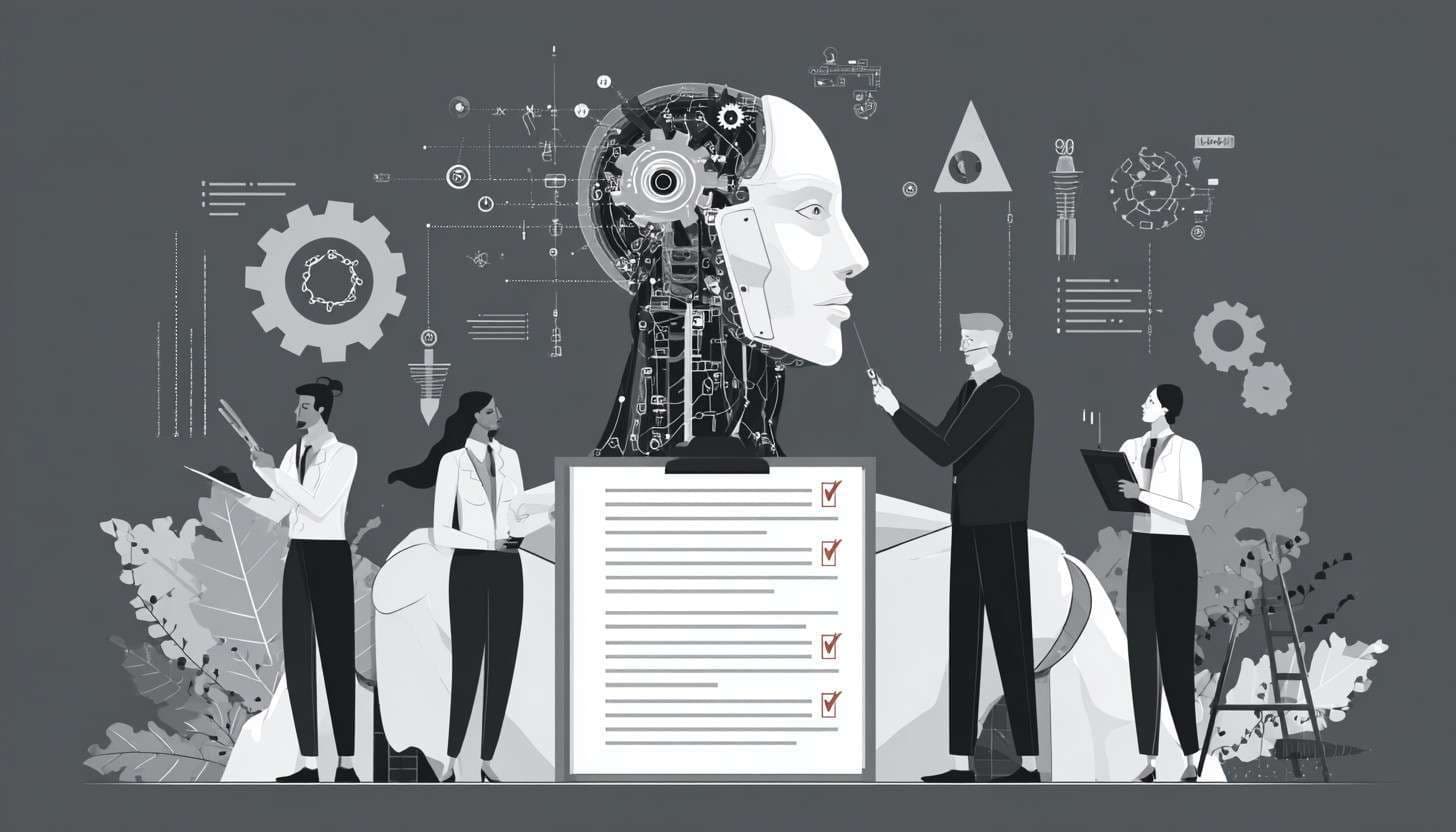
Artificial intelligence is no longer a distant concept reserved for researchers and tech giants. It is woven into how people work, communicate, learn, and make decisions every single day. As AI becomes more deeply embedded in society, the question of how to use it responsibly has become one of the most pressing conversations of our time.
The tools available today are more capable, more accessible, and more consequential than at any previous point in history. A single AI system can now influence hiring decisions, shape medical diagnoses, drive financial recommendations, and generate content at a scale that no human team could match. With that level of reach comes a level of responsibility that cannot be treated as optional.
What Responsible AI Usage Actually Means
Responsible AI usage is the practice of engaging with artificial intelligence tools in ways that are ethical, transparent, and mindful of consequences. It goes far beyond simply knowing how to operate a tool. It involves asking who benefits, who might be harmed, and whether the outcomes align with human values.
This concept applies to individuals, organizations, and governments alike. A student using AI to assist with research carries a responsibility to verify information and maintain academic integrity. A company deploying AI in hiring processes must ensure that the system does not replicate or amplify existing biases. Responsible usage is not a single action but an ongoing discipline.
Many people mistakenly believe that responsibility in AI belongs only to the developers who build these systems. In reality, every person who uses an AI tool participates in shaping the outcomes it produces. Understanding this shared accountability is the first step toward a more ethical AI ecosystem.
Why It Matters More Than Ever in 2026
The pace of AI adoption has accelerated dramatically. From AI applications in daily life that simplify household routines to sophisticated decision-making systems in healthcare and finance, AI now touches nearly every domain. This rapid expansion creates new risks that require thoughtful navigation.
One of the most significant risks is automation bias, where people place excessive trust in AI-generated outputs without critical evaluation. Studies in healthcare settings have shown that clinicians sometimes defer to AI recommendations even when their own expertise suggests a different course of action. This uncritical acceptance can have serious consequences when the AI system is wrong.
Another major concern is data privacy. Many AI tools operate on vast amounts of user data, and individuals often have little visibility into how that data is collected, stored, or used. Responsible usage requires asking these questions before engaging with any AI-powered platform and making informed decisions about data sharing.
Core Principles That Guide Responsible AI Behavior
Researchers and ethics boards around the world have worked to codify principles for responsible AI. While variations exist across frameworks, several themes appear consistently and form a reliable foundation for practice.
Transparency is the expectation that AI systems and their limitations are made visible to users and those affected by them. An AI writing assistant should make clear that it generates probabilistic text based on training data, not verified facts. Exploring best AI writing tools that prioritize this kind of transparency can help users make more informed choices about which platforms to trust.
Fairness requires that AI systems treat different groups equitably and that biases embedded in training data are identified and mitigated. This is not a technical problem alone but a deeply human one that requires ongoing attention and diverse perspectives in the development process.
Accountability means that when AI systems cause harm, there are clear lines of responsibility. Organizations that deploy AI must take ownership of outcomes, even when those outcomes emerge from complex, opaque processes.
Privacy demands that personal data used to train or power AI systems is handled with care, consent, and security. Users have the right to understand what information is being collected and why.
Human oversight ensures that AI augments human judgment rather than replacing it entirely. Critical decisions affecting people’s lives should remain in human hands, with AI serving as a support tool rather than a final authority. This principle is particularly vital in domains like criminal justice, child welfare, and medical treatment, where errors carry irreversible consequences.
How Responsible AI Usage Applies Across Different Contexts
The principles above are universal, but how they translate into practice varies considerably by context. Understanding these variations helps users and organizations apply responsible AI more effectively in their specific environments.
In the workplace, AI technology in the workplace introduces questions about employee monitoring, automated performance evaluation, and the displacement of certain job functions. Responsible usage here means engaging employees in the conversation, establishing clear policies about AI decision-making, and preserving pathways for human review and appeal.
In education, the rise of AI tools has created genuine tension between efficiency and academic integrity. Students who explore AI resources for students should understand not just how to use these tools but how to use them in ways that support genuine learning rather than circumventing it. Educators, in turn, have a responsibility to create AI-inclusive learning frameworks that address these tensions honestly and prepare students for a world where working alongside AI is a core professional skill.
In software development, those building AI systems must approach AI programming tutorials and foundational skills with an awareness of the ethical dimensions of what they are building. Writing code for an AI system is not ethically neutral; it encodes values, assumptions, and priorities that will affect real people.
Practical Steps to Use AI More Responsibly
Knowing the principles is valuable, but applying them in everyday decisions is where responsible AI usage becomes real. The gap between knowing what is right and actually doing it is often larger than people expect, particularly under time pressure or competitive business conditions. The following practices offer a concrete starting point for individuals and teams who want to close that gap deliberately:
- Verify outputs before acting on them. AI systems can generate confident-sounding but incorrect information. Cross-checking AI outputs against reliable sources is a non-negotiable habit for responsible users.
- Understand the tool you are using. Before incorporating an AI into a workflow, spend time learning how it works, what data it was trained on, and what its known limitations are. A curated list of AI tools website can help users compare options and understand their capabilities.
- Challenge bias actively. If an AI system produces outputs that seem skewed or unfair, report it, question it, and avoid using it uncritically. Users are not passive recipients of AI outputs; they are active participants in the feedback loop.
- Maintain human judgment on high-stakes decisions. Never delegate irreversible or high-impact decisions entirely to an AI system. Keep a human in the loop whenever the stakes are significant.
- Stay informed about AI developments. The field evolves rapidly. Following resources such as deep learning workshops helps users stay current without requiring a technical background.
- Respect intellectual and creative ownership. Using AI to generate content that mimics the work of specific individuals or that reproduces copyrighted material without attribution raises serious ethical concerns.
The Role of Technical Literacy in Responsible AI
You do not need to be an engineer to use AI responsibly, but a baseline of technical understanding significantly strengthens your ability to evaluate AI systems critically. Knowing, for example, that a language model generates text by predicting likely word sequences rather than by reasoning or understanding helps users interpret its outputs more accurately and with the appropriate degree of skepticism.
Those who want to deepen their understanding can explore open source machine learning libraries and the frameworks that underpin modern AI. This kind of technical grounding demystifies AI and reduces the tendency toward either uncritical acceptance or unfounded fear. It also equips users to ask better questions when evaluating AI tools and to recognize claims that do not hold up under scrutiny.
Understanding multimodal AI examples is also valuable for responsible usage in a landscape where AI increasingly combines text, images, audio, and video. Knowing how these systems work helps users recognize the potential for manipulation, misinformation, and misuse that comes with multimodal capabilities. The same technology that enables genuinely useful applications can also be used to fabricate realistic-looking media, which makes critical evaluation more important than ever.
Learning about AI chatbot implementation gives users and organizations insight into how AI-driven communication tools are built, which in turn informs smarter decisions about deploying them responsibly in customer-facing or internal applications. When decision-makers understand the mechanics behind a chatbot, they are far better equipped to set appropriate expectations, establish safety guardrails, and design meaningful human escalation paths.
Building a Culture of Responsible AI
Individual habits matter, but the most durable change comes from culture. Organizations that treat responsible AI usage as a core value rather than a compliance checkbox are better positioned to navigate the challenges ahead. This means creating psychological safety for employees to raise concerns about AI systems, investing in ethics training alongside technical skills, and making responsible usage visible in policies, communications, and leadership behavior.
Cross-functional collaboration is particularly valuable in building this culture. When legal teams, product designers, data scientists, and frontline workers all participate in conversations about AI deployment, the resulting systems tend to be more balanced, more scrutinized, and more genuinely useful. Siloed development, by contrast, tends to produce tools that optimize for narrow metrics while missing broader human impacts.
Governments and regulatory bodies play an equally important role in setting standards that hold organizations accountable without stifling innovation. The most effective frameworks are those that are developed collaboratively, with input from technologists, ethicists, civil society, and affected communities. Regulation alone will never be sufficient; it must be accompanied by a genuine shift in how organizations and individuals relate to the technology they build and use.
In Summary
Responsible AI usage is not a constraint on the power of artificial intelligence. It is the foundation that makes that power sustainable, trustworthy, and genuinely beneficial. As AI continues to evolve and expand, the individuals and organizations that invest in responsible practices today will be the ones that earn long-term trust and deliver lasting value.
The conversation about how to use AI well is not separate from the conversation about how to live and work well. It is the same conversation, now unfolding at a pace and scale that demands our full attention. Those who engage with it seriously, who ask the hard questions and hold themselves and their organizations to a higher standard, will not only use AI more effectively but will help shape a future where AI serves humanity rather than the other way around.
Related Articles

Is Character AI Generative AI? How It Works and What It Creates
Is Character AI generative AI? Yes. It creates original text responses from your prompts, conversation context, and patterns learned during training. Instead…
Read more
I for One Welcome Our AI Overlords: Meaning, Origin, and AI Culture
“I for one welcome our AI overlords” sounds like a joke because it is one—usually. The phrase signals ironic enthusiasm, reluctant acceptance, or humorous su…
Read more
What Are AI Skills? Essential Abilities for Today’s Workplace and Business
If you’ve wondered, what are AI skills, the answer goes beyond coding or building robots. AI skills are the practical abilities to understand what AI can do,…
Read more