
The New Author: Is AI Replacing Human Creativity?
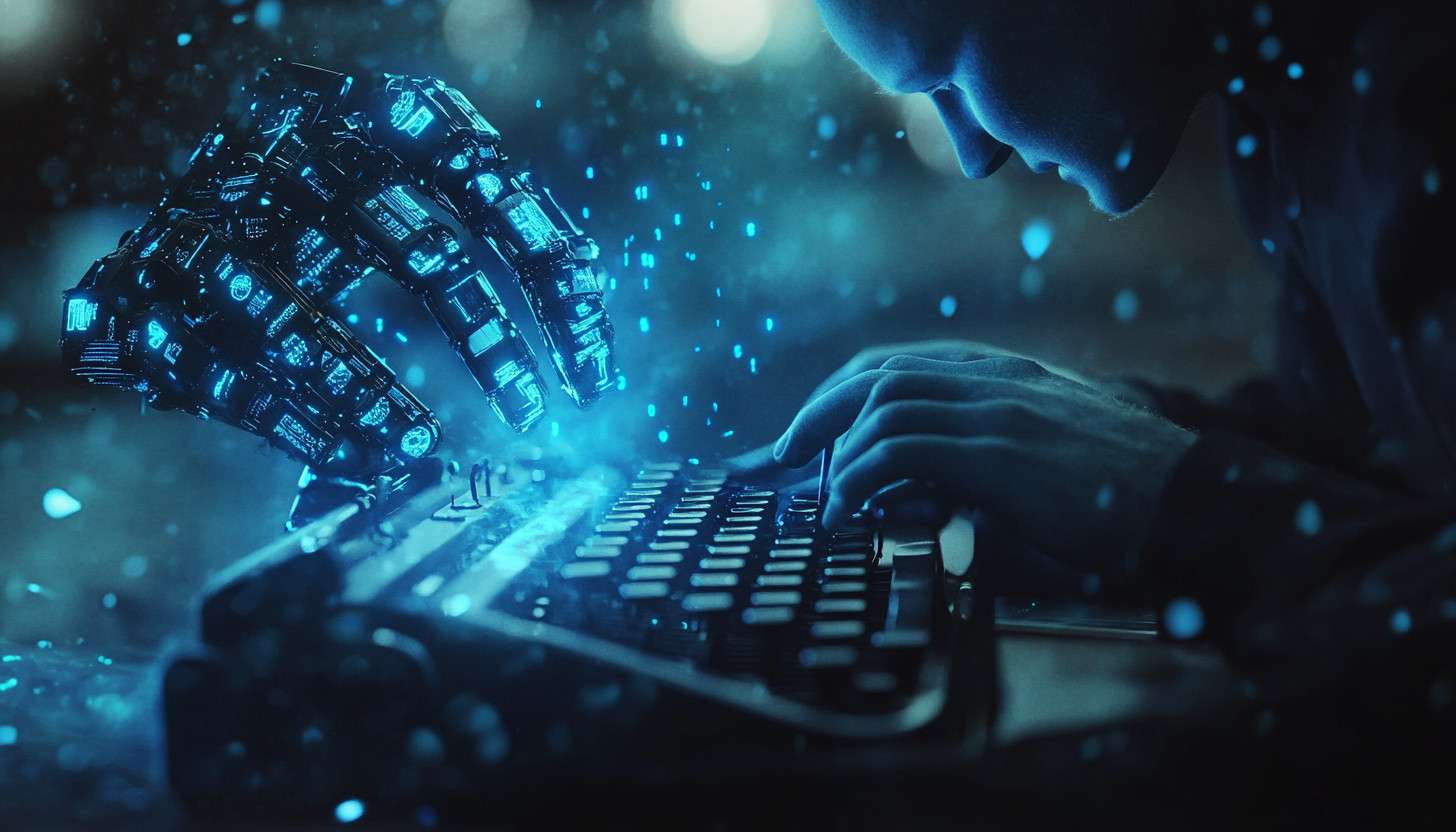
The landscape of authorship is changing rapidly as artificial intelligence in writing becomes more prevalent. This evolution raises important questions about the role of human creativity and whether AI authorship can truly replace the unique touch of a human writer.
Understanding the interplay between human creativity and AI is crucial for aspiring authors and established writers alike. As we explore the dynamics of Human vs. Machine in book writing, we must consider how these two forces can coexist and complement each other.
Join us as we delve deeper into this fascinating topic, examining the implications of AI on the future of storytelling.
The Rise of AI in Writing
The development of AI in literature has come a long way since its inception. Early experiments with AI writing tools focused on basic sentence construction and grammar checks. Today, we see more sophisticated algorithms capable of generating entire stories, reflecting a significant leap in the Human vs. Machine in book writing debate.
Currently, there are several creative writing tools available for writers looking to enhance their craft. Programs like OpenAI's ChatGPT and Sudowrite offer features that assist authors in brainstorming ideas and generating text. Many writers are now exploring the capabilities of an AI content writer to streamline their workflow and spark fresh inspiration.
The benefits of using AI in the writing process are numerous. Writers can produce content faster and more efficiently, allowing them to focus on refining their unique voices. Additionally, AI can analyze large datasets to uncover trends and themes, offering insights that may inspire fresh ideas for future writing projects.
As we navigate this evolving landscape, it’s clear that AI is not here to replace human creativity but rather to complement it. The future of writing lies in harnessing these creative writing tools while maintaining the emotional depth and authenticity that only human authors can provide. Embracing AI as a partner can lead to innovative storytelling that blends technology with the rich tapestry of human experience.
Defining Human Creativity
Human creativity is a unique trait that sets authors apart from machines. It encompasses imagination, intuition, and the ability to connect with readers on a personal level. Unlike machine learning in literature, which relies on data patterns, human creativity draws upon individual experiences and emotions to craft compelling narratives.
Emotions play a crucial role in storytelling. They allow writers to convey feelings that resonate with readers, creating a shared experience.
For example, a story about loss can evoke empathy, while a tale of triumph can inspire hope. These emotional connections are rooted in the human condition, something that AI cannot fully replicate.
Personal voice is another essential aspect of human creativity. Each writer has a distinct style that reflects their personality and worldview. This individuality shapes narratives in ways that machine-generated content often lacks. A writer’s unique perspective adds depth and richness to their work, making it memorable and relatable to audiences.
While AI tools can aid in the writing process, they cannot replace the depth of human creativity. The ability to weave emotions and personal experiences into stories is what makes literature truly impactful. As we explore the intersection of AI and authorship, it is vital to appreciate the irreplaceable qualities that define human creativity.
The Mechanics of Machine Efficiency
AI generates content quickly and accurately, offering a stark contrast to traditional writing methods. With advanced algorithms, these AI writing tools can analyze vast amounts of data in seconds. This capability allows them to produce coherent text that often meets specific criteria set by the user.
The algorithms behind AI writing tools are complex yet fascinating. They use natural language processing (NLP) to understand context and structure. For instance, tools like OpenAI's GPT-3 rely on deep learning models trained on extensive datasets, allowing them to mimic human-like writing patterns.
Examples of successful AI-generated works demonstrate the potential of writing technology. In 2020, an AI-generated novel titled "1 the Road" was published, showcasing how machines can craft entire narratives. Such instances highlight the ongoing conversation about human vs. machine in book writing and how digital authorship is evolving in this new landscape.
As we explore the mechanics of machine efficiency, it becomes clear that AI offers both speed and precision in content creation. However, this raises questions about the essence of storytelling and whether machine-generated narratives can truly resonate with readers. The blend of technology and creativity continues to shape the future of authorship, inviting both excitement and skepticism.
Collaboration Between Humans and Machines
In recent years, several authors have embraced collaborative writing with AI as a co-writer. One notable example is the science fiction author Robin Sloan, who used an AI tool to help generate ideas for his novel "Sourdough." This partnership allowed him to explore new narrative paths and enhance his creativity, showcasing how AI can serve as a valuable asset in the writing process. By redefining authorship, such collaborations highlight the potential of human-AI interaction in literature.
The benefits of a hybrid approach to writing are numerous. Writers can produce content more efficiently while maintaining their unique voices. Exploring resources like the best AI tools directory can help authors discover innovative platforms that assist in generating drafts or suggesting plot twists, allowing them to focus on refining their narratives and characters.
AI can assist in generating drafts or suggesting plot twists, allowing authors to focus on refining their narratives and characters. This collaboration fosters innovation and expands the creative possibilities for aspiring writers, encouraging them to experiment with new styles and formats.
However, challenges remain in human-AI collaboration. Authors may struggle with integrating AI-generated content into their work seamlessly. They might also face concerns about the authenticity of their voices when using AI tools.
The balance between machine assistance and personal creativity requires careful consideration to ensure that human emotions and experiences are not overshadowed by technology.
Collaborative writing with AI presents both opportunities and challenges. As writers navigate this evolving landscape, they must find ways to maintain their artistic integrity while leveraging the efficiency of AI tools. Embracing this partnership could redefine authorship and create a richer literary experience for both creators and readers alike.
Ethical Considerations in AI Writing
As AI writing tools become more prevalent, questions about authorship and intellectual property arise. Who truly owns the work generated by an AI? This dilemma is particularly pronounced when a human collaborates with a machine, as the lines between human creativity and machine-generated content blur.
Plagiarism and originality issues are also significant concerns in the realm of AI writing. While AI can produce text quickly, it often relies on existing works to generate new content. This practice raises ethical questions regarding the originality of AI outputs, leading to fears that they may inadvertently replicate ideas or phrases from established authors.
Furthermore, biases present in AI-generated content can skew narratives and representation. Since AI models learn from vast datasets that may contain historical biases, the results can reflect those same prejudices. This highlights the importance of maintaining a critical eye on how human vs. machine in book writing influences the stories we tell and the voices that are amplified.
Addressing these ethical considerations is essential for both writers and developers. It is crucial to establish guidelines that ensure transparency and accountability in AI usage. By doing so, we can work towards a literary landscape that respects human creativity while responsibly integrating machine efficiency.
The Future of Authorship
As AI continues to integrate into the writing process, the future of authorship will likely see significant changes. Writers may find themselves collaborating with AI tools to enhance their creative output. This partnership can lead to innovative storytelling methods and new genres that blend human creativity with machine efficiency.
The role of authors is evolving in the digital age. They are no longer just solitary creators but also tech-savvy individuals who must understand how to use AI effectively. Authors will need to adapt their skills to incorporate AI tools, allowing them to focus more on high-level creative ideas rather than mundane tasks like grammar checks or formatting.
Aspiring writers stand to benefit from this AI-enhanced landscape. With AI writing tools providing assistance, they can experiment with various styles and formats without the fear of making mistakes. These opportunities allow new voices to emerge, enriching the literary world with diverse perspectives and stories that might not have been told otherwise.
The future of authorship presents both challenges and opportunities. While AI integration may reshape the writing process, it does not diminish the importance of human creativity. Writers must embrace these advancements while maintaining their unique voices, ensuring that storytelling remains a deeply human endeavor.
In Summary
In this article, we explored the complex relationship between human creativity and AI in writing. We discussed the rise of AI tools, the unique qualities of human authorship, and how collaboration can enhance the writing process. As we navigate the future of authorship, it's clear that the debate of Human vs. Machine in book writing will shape how stories are told.
Balancing human creativity with machine efficiency is essential for aspiring authors. Writers should embrace technology as a tool while preserving their distinctive voices. The future of writing is not about replacement; it's about integration and innovation in the art of storytelling.
Related Articles

Self Hosted AI Starter Kit for Secure Local AI Workflows
A self hosted ai starter kit gives small businesses, marketers, and creators a practical path to powerful AI without sending every prompt or file to a cloudR…
Read more
Tiny Script Generator: How to Choose Fast, Focused AI Writing
A tiny script generator can be a smarter AI writing choice when you need one focused job done quickly and consistently. “Tiny” describes its narrow, purpose-…
Read more
Discover the Top Titan Blogs for Space Enthusiasts and Explorers
Titan, Saturn’s largest moon, captivates the imagination of space enthusiasts around the world. Its thick atmosphere, vast lakes of liquid methane, and in…
Read more