
7 Tools for Measurable Business Objectives That Work
In the fast-paced world of business, where adaptability and precision are paramount, establishing measurable business objectives is not merely a best practice — it’s a necessity. Clear, quantifiable goals serve as navigational beacons, guiding teams toward tangible results while ensuring that every strategy aligns with the organization’s overarching vision. However, simply setting these objectives is not enough; effective goal setting for businesses and performance tracking mechanisms are crucial for transforming ambition into achievement.
Imagine turning vague aspirations into explicit milestones that can be regularly monitored and adjusted. The right tools can empower business owners, project managers, and team leaders to track progress consistently, foster accountability, and drive meaningful results. In this article, we’ll explore seven essential tools designed to help you define, measure, and ultimately attain your business objectives.
Join us as we delve into methods that not only clarify your goals but also enhance your organization’s capability to measure success in real time. Let’s unlock the door to a future where your aspirations are not just dreams, but achievable realities.
Understanding Measurable Business Objectives
Measurable business objectives are specific, quantifiable goals that an organization aims to achieve within a defined timeframe. These objectives are not merely aspirational statements; they are grounded in data, making them essential for accountability and performance evaluation. For instance, instead of setting a vague goal like “increase sales,” a measurable objective would specify, “increase sales by 20% in Q2.”
This clarity not only gives teams a clear target but also helps stakeholders to easily assess progress and outcomes. Significance lies in the precision and focus that measurable business objectives provide. They enable businesses to align their resources and efforts towards achieving clear outcomes, which can significantly enhance performance.
When teams know exactly what they are working towards, they can prioritize tasks more effectively and make informed decisions. This is where business objectives software comes into play, offering a structured approach to set, track, and adjust goals as needed. For example, a marketing team might use software to track their customer acquisition techniques against a specific target, allowing them to adapt strategies in real time.
Furthermore, measurable business objectives play a critical role in fostering a culture of accountability. When employees are aware of the specific metrics they need to hit, it encourages ownership of tasks and can lead to higher levels of engagement and motivation. Consider the implementation of the OKR (Objectives and Key Results) framework; this method transforms broad company goals into actionable steps that can be tracked and measured.
As teams set quarterly OKRs, everyone from leadership to individual contributors understands how their performance contributes to the overall success of the organization, thus driving collective progress. Establishing measurable business objectives is not just about setting targets; it’s about creating a foundation for strategic decision-making and enhanced productivity. By leveraging tools like business objectives software and methodologies such as OKRs, companies can ensure that every effort is directed toward achieving tangible results, ultimately leading to greater success and sustainability in a competitive landscape.
Key Performance Indicators (KPIs)
Key Performance Indicators, or KPIs, are quantifiable measures that help businesses assess their progress toward key objectives. They serve as a compass, guiding organizations in determining how well they are performing against their strategic goals. KPIs can vary widely depending on the industry, purpose, and target outcomes, but their unifying purpose is to provide clear insights into success and areas needing improvement.
For example, a SaaS company might use monthly recurring revenue (MRR) as a critical KPI, while a retail business could focus on sales per square foot to gauge effectiveness in its physical spaces. When it comes to selecting the right KPIs, it’s crucial to ensure they align closely with your organization’s strategic planning frameworks. Start by identifying what exactly you want to measure — whether it’s productivity, customer satisfaction, or revenue growth.
Once you’ve defined your objectives, choose KPIs that offer a tangible representation of your progress. For instance, if your goal is to improve customer satisfaction, you might select Net Promoter Score (NPS) as a KPI, enabling you to track customer loyalty and sentiment over time. This shift from vague aspirations to well-defined, measurable indicators provides a clearer roadmap for achieving your measurable business objectives.
It’s also essential to engage your team in the KPI selection process. By involving key stakeholders — from department heads to frontline employees — you not only foster a sense of ownership but also gain diverse perspectives on what metrics are most relevant. When everyone understands the KPIs and their importance, it enhances accountability and drives collective efforts toward the common goal.
Remember, KPIs should be regularly reviewed and adjusted as necessary to ensure they remain relevant amid changing business landscapes and priorities. It’s important to communicate and visualize your KPIs effectively, which aligns with proven growth hacking methods. Utilizing performance dashboards can transform raw data into accessible insights, making it easier for your team to grasp their performance at a glance.
This visual representation not only keeps everyone informed but also motivates the team by highlighting both achievements and areas for growth. By strategically implementing KPIs alongside a strong review process, you lay a robust foundation for navigating towards your business’s long-term success. Learn more about effective KPI frameworks from Harvard Business Review’s guide on performance metrics.
OKR Framework
Objectives and Key Results (OKRs) help organizations align goals and enhance focus in dynamic environments. OKRs define ambitious objectives with measurable key results, allowing businesses to set high-level goals and actionable milestones. For example, a tech startup may aim to boost user engagement, targeting a 50% increase in daily active users while reducing churn to below 5%.
Implementing OKRs involves fostering a culture of transparency and collaboration, encouraging team input on goal-setting. Setting quarterly or bi-annual OKRs promotes ambitious yet attainable goals, with regular check-ins to assess progress and adapt as needed. Reflecting on outcomes and celebrating achievements maintain morale and promote continuous improvement.
Overall, OKRs serve as a catalyst for cultural transformation and strategic clarity, connecting individual efforts to collective goals and unlocking an organization’s potential. This framework is particularly effective when combined with implementing business plans that provide structure and direction.
Performance Dashboards
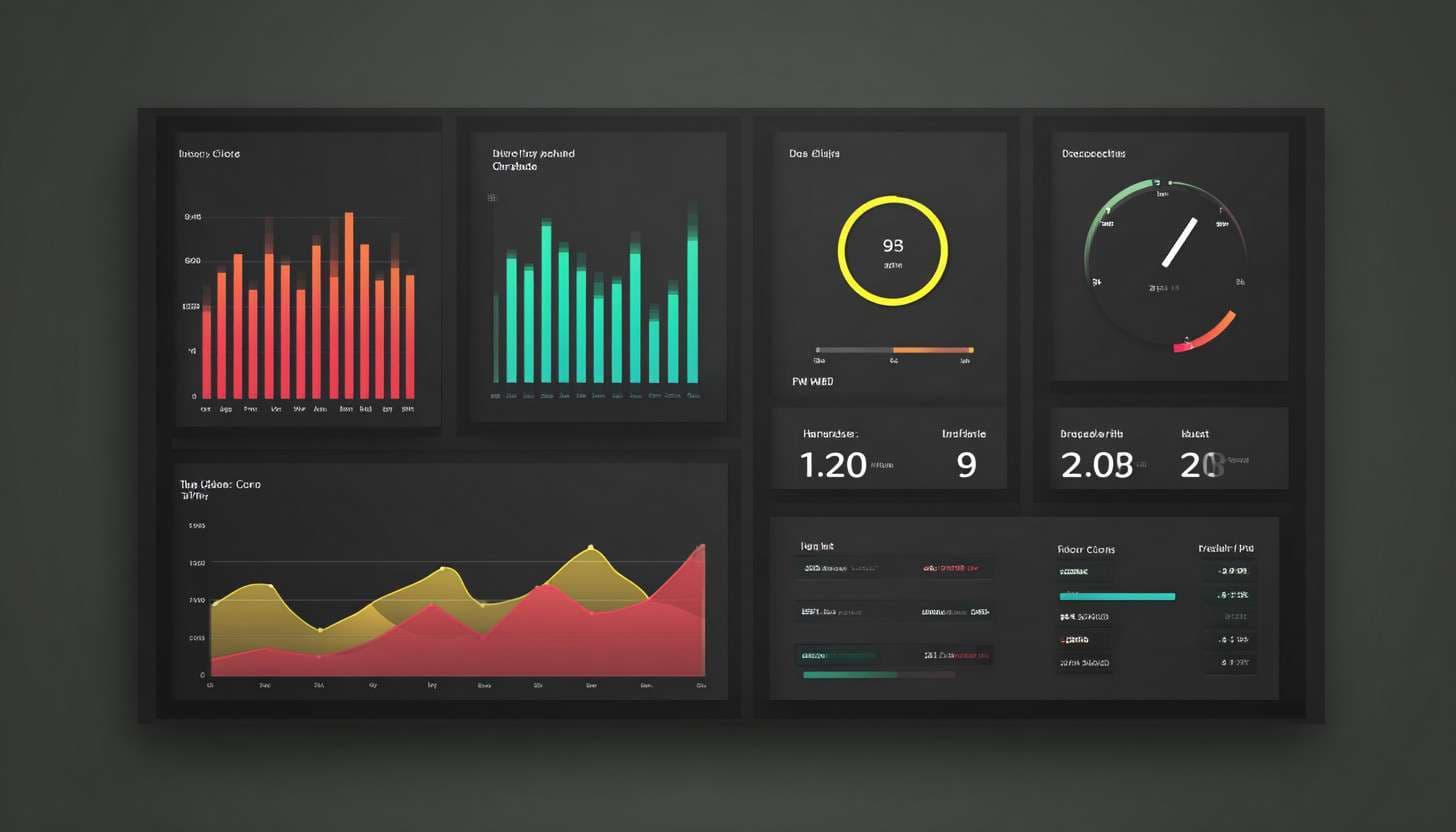
In today’s data-driven environment, performance dashboards are vital for actionable insights. They consolidate business metrics, enabling teams to monitor progress toward measurable business objectives easily. By visualizing complex data, organizations can spot trends and make swift decisions, like marketing teams adjusting campaigns based on real-time metrics.
When selecting dashboard tools, it’s crucial to find matches for specific needs. Tableau suits large datasets with advanced analytics, while Google Data Studio offers user-friendly access and integration with other Google services. Encouraging regular data engagement fosters a culture of data literacy, leading to innovative strategies.
Ultimately, dashboards streamline visualization and promote informed decision-making for organizational success. These tools work exceptionally well when integrated with growth strategy frameworks to drive measurable outcomes. Explore the directory of AI applications to discover advanced dashboard solutions powered by artificial intelligence.
Agile Methodology
Agile methodology, originally designed for software development, has emerged as a transformative approach for businesses seeking to enhance their goal-setting and tracking processes. At its core, Agile focuses on flexibility, collaboration, and iterative progress, allowing teams to adapt their measurable business objectives and strategies based on real-time feedback and performance data. This adaptability is crucial, as it enables businesses to pivot quickly in response to changes in market conditions or customer needs, ensuring that their goals remain relevant and measurable.
One of the key practices of Agile is breaking down larger objectives into smaller, manageable tasks, often referred to as “sprints.” This not only facilitates more precise measurement of progress but also enhances team accountability. For instance, a marketing team might set a quarterly goal to increase web traffic by 20%.
By breaking this goal into bi-weekly sprints — like launching specific campaigns or optimizing SEO — the team can evaluate the effectiveness of each action and make necessary adjustments before the quarter ends. This iterative approach fosters a culture of continuous improvement, allowing businesses to refine their strategies based on real-world outcomes, much like the principles outlined in small business strategy examples.
Incorporating Agile principles also involves regular stand-up meetings and retrospectives, where teams discuss what went well and what could be improved. These practices create a feedback loop that keeps everyone aligned and focused on measurable outcomes. For example, a product development team might hold weekly check-ins to assess progress on a new feature.
By doing this, organizations not only track their objectives more effectively but also nurture a dynamic team environment that encourages collaboration and innovation. Agile’s emphasis on responsiveness and continuous learning serves as a powerful framework for measuring business objectives, and you can learn more about agile business models to enhance your implementation.
This adaptability can be particularly beneficial in industries marked by rapid change, ensuring that businesses don’t just set goals, but actively pursue and achieve them with measurable results. For comprehensive guidance, review the Agile Alliance’s resource library.
Regular Review Cycles
Establishing regular review cycles is essential for achieving measurable business objectives and adapting to changes. These evaluations foster accountability and open communication, promoting a culture of continuous improvement. Businesses should decide the frequency of reviews — weekly, monthly, or quarterly — based on their needs.
Structured sessions allow teams to analyze performance data against their objectives, ensuring discussions are fact-based. Incorporating feedback loops enhances strategies and promotes employee ownership. Using project management software can help document insights and track their impact.
Organizations prioritizing these cycles are better positioned to navigate challenges and align strategies with broader goals, making objectives achievable. This approach complements the strategic insights gained from SWOT Analysis for Businesses to identify strengths and opportunities. Additionally, understanding different types of corporate strategies can help inform your review process and ensure alignment with organizational goals.
Unlock Your Business Potential
In this article, we explored seven powerful tools designed to help you achieve measurable business objectives. From the fundamentals of KPIs and project management software to the innovative OKR framework and Agile methodology, each tool offers unique benefits that can transform your organization’s performance. Additionally, the importance of performance dashboards and regular review cycles cannot be overstated; they provide the clarity and feedback necessary for continuous improvement.
As you integrate these strategies into your operations, remember that success is not just about setting goals but also about diligently tracking progress and adapting to change. By embracing these techniques, you’re not only setting measurable business objectives but also equipping your team for long-term success. Take that step forward and unlock your business’s full potential!
Related Articles

Unlock Startup Success: Harnessing an AI Business Plan Generator
In today’s fast-paced world, an **AI business plan generator** can be your secret weapon for crafting a startup strategy that stands out. Think of it as your…
Read more
What Jobs Are Safe from AI? Top Resilient Careers for 2026
As we dive into the evolving job landscape, one question looms large: what jobs are safe from AI? With artificial intelligence rapidly transforming industrie…
Read more
Are Your Brand Loyalty Initiatives Actually Working?
Brand loyalty goes beyond repeat purchases—it’s built on emotional connection, trust, and value. Learn how to design initiatives that create lasting customer re…
Read more