
Which Programmatic Advertising Strategies Really Work?
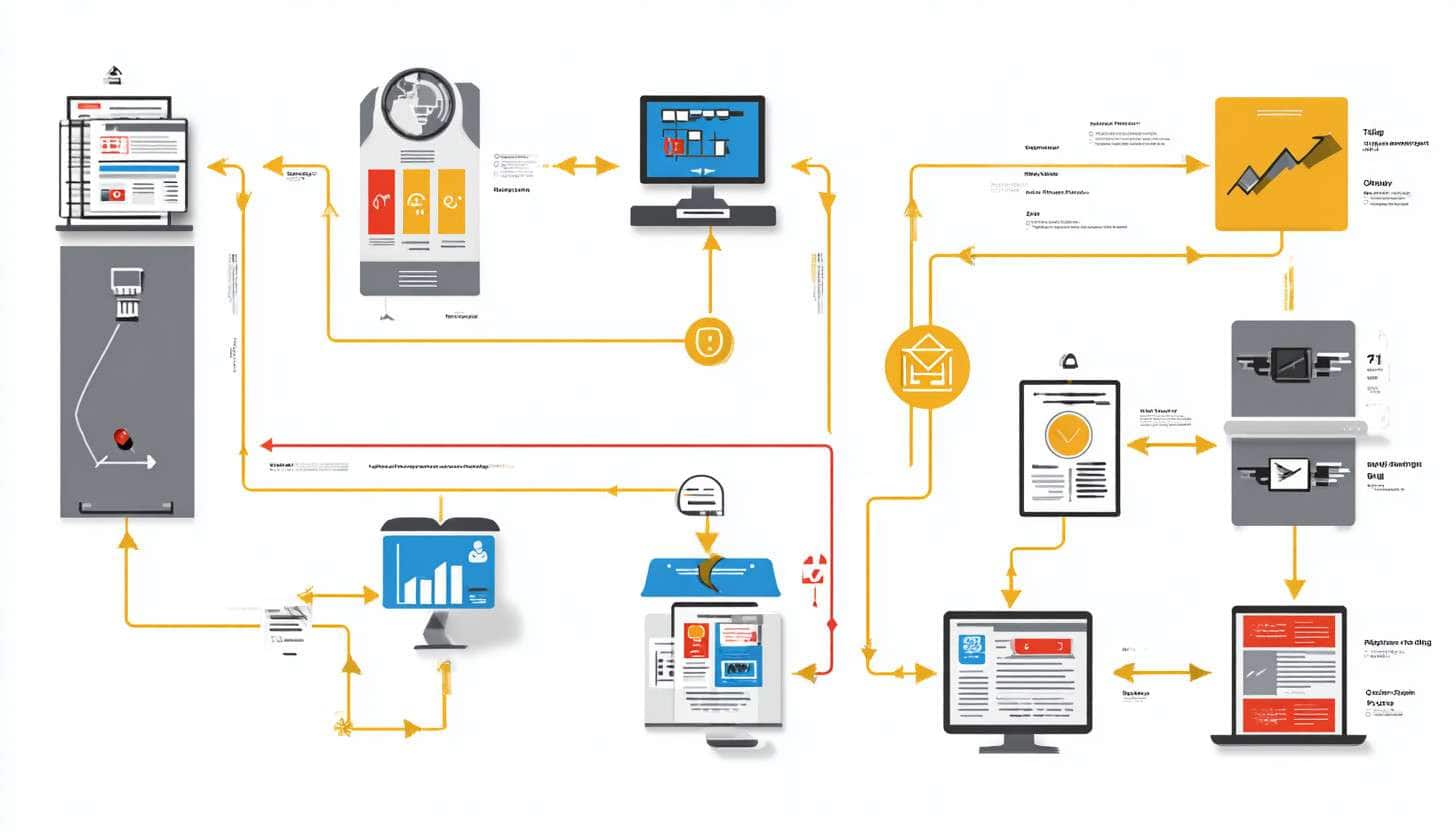
Programmatic advertising has fundamentally changed how brands buy and place digital ads. What once required manual negotiations and insertion orders now happens in milliseconds through automated auction systems. Yet many marketers still run campaigns without a clear strategy, hoping the technology will do the heavy lifting for them.
The reality is that technology alone does not guarantee results. The brands winning in programmatic advertising today are those that combine smart data practices, intentional targeting, and constant optimization. Understanding the full scope of programmatic advertising strategies is what separates campaigns that drain budgets from campaigns that generate real business growth.
What Programmatic Advertising Actually Involves
Programmatic advertising is the automated buying and selling of digital ad inventory using data and algorithms. It operates across display, video, audio, connected TV, and native formats in real time. The ecosystem includes demand-side platforms (DSPs), supply-side platforms (SSPs), and data management platforms (DMPs) all working together.
At its core, programmatic runs on auctions. Every time a user loads a webpage, an auction occurs in milliseconds to determine which ad gets shown. Advertisers bid based on how valuable that particular user, context, and moment is to their campaign goals.
Understanding this infrastructure matters because your strategy decisions plug directly into these systems. Poor targeting parameters, weak creative, or misaligned bidding rules will cost you money regardless of how sophisticated the platform is.
Building Your Audience Targeting Foundation
Audience targeting is the backbone of any effective programmatic campaign. The depth and accuracy of your audience data determines how efficiently your budget converts into meaningful impressions. Marketers who rely solely on broad demographic buckets consistently underperform those who build layered, intent-driven segments.
One of the most consequential decisions in programmatic is choosing between contextual targeting vs behavioral targeting. Contextual targeting places ads based on the surrounding content environment, while behavioral targeting follows users based on their past actions and interests. Each approach carries distinct advantages depending on your campaign objective, audience maturity, and available data.
The data you use for targeting also matters enormously. Brands increasingly recognize that first-party data strategies produce better targeting precision and are far more durable than reliance on third-party segments. With growing privacy regulations and browser-level tracking restrictions, building owned audience data is no longer optional.
The Shift Toward First-Party Data in Programmatic
Third-party cookies are losing relevance across the digital advertising landscape. Regulatory frameworks like GDPR and CCPA have accelerated user privacy expectations, pushing advertisers to reconsider how they collect and activate audience data. The brands that have invested in first-party data infrastructure are now operating with a significant competitive advantage.
Understanding the benefits of first-party data goes beyond simple privacy compliance. First-party data is more accurate, more recent, and directly tied to real interactions your customers have had with your brand. That level of signal quality simply cannot be replicated by purchased third-party segments.
It is equally important to understand the structural differences when evaluating first-party vs third-party data. First-party data comes from direct relationships, while third-party data is aggregated from external sources with varying degrees of accuracy and consent. The distinction shapes how you should weigh each data type in your targeting strategy.
Key Programmatic Strategies Worth Implementing
Effective programmatic execution is not a single tactic but a combination of deliberate choices applied across your campaign structure. Below are the core strategies that consistently drive performance improvements:
- Private Marketplace (PMP) Deals: Negotiate direct access to premium inventory with specific publishers rather than relying entirely on open auction. PMPs offer better brand safety, higher-quality placements, and more transparency.
- Audience Suppression: Exclude existing customers or recent converters from prospecting campaigns to avoid wasted spend on users who have already completed a desired action.
- Dynamic Creative Optimization (DCO): Use programmatic systems to serve personalized ad variations based on user data, location, or behavior in real time rather than running a single static creative.
- Frequency Capping: Set exposure limits per user to prevent ad fatigue, which drives up costs while diminishing engagement and brand perception over time.
- Lookalike Modeling: Leverage your highest-value customer segments to identify and reach new audiences that share similar behavioral and demographic profiles.
- Sequential Messaging: Structure ad delivery so users move through a narrative journey, with each ad building on the previous exposure to guide them toward conversion.
These strategies are most powerful when implemented together rather than in isolation. Combining audience suppression with lookalike modeling and sequential messaging, for example, creates a full-funnel programmatic system that is difficult to outperform with any single tactic alone.
Optimizing Ad Placement for Maximum Impact
Where your ads appear is just as important as who sees them. Programmatic platforms give you substantial control over placement targeting, and failing to use it carefully results in impressions served in low-quality or brand-unsafe environments. Thoughtful ad placement strategies can dramatically improve both click-through rates and post-click engagement.
Above-the-fold placements, viewability thresholds, and device-specific targeting all play a role in placement quality. A programmatic campaign running primarily on mobile devices requires different creative dimensions, load time considerations, and bidding logic than one optimized for desktop display. Treating all placements as interchangeable is one of the most common and costly mistakes in programmatic management.
Inventory exclusion lists are another underutilized placement tool. Building and maintaining site-level or category-level blocklists keeps your brand away from environments that attract invalid traffic or misaligned audiences. This protects budget efficiency while supporting broader brand safety objectives.
Bidding Intelligence and Budget Management
Real-time bidding strategy determines how aggressively you compete in auction environments and at what price. Overpaying for impressions inflates cost-per-acquisition, while underbidding means missing valuable inventory entirely. Effective ad spend optimization requires understanding both your true audience value and the competitive dynamics of the auctions you are entering.
Most DSPs now offer algorithmic bidding options that adjust bids in real time based on conversion likelihood signals. These automated bidding strategies can outperform manual management when trained on sufficient conversion data. However, they require careful setup, including accurate conversion tracking, appropriate attribution windows, and clearly defined target metrics.
Budget pacing is another critical variable. Programmatic systems can burn through daily budgets too quickly if pacing is set incorrectly, leaving campaigns dark for large portions of the day. Even pacing or goal-based delivery ensures impressions are distributed in a way that aligns with actual user activity patterns throughout the day.
Measuring What Actually Matters
Campaign measurement in programmatic is frequently misunderstood. Vanity metrics like impressions and click-through rates tell an incomplete story about actual business impact. Tracking advertising performance metrics with proper rigor means looking beyond surface-level data to understand incremental lift, view-through attribution, and true conversion quality.
Attribution modeling deserves particular attention in programmatic environments. Last-click attribution consistently undervalues upper-funnel programmatic touchpoints that influence purchase decisions without receiving direct credit. Multi-touch attribution models provide a more accurate picture of how your programmatic investments are contributing to conversion paths.
Brand lift studies and conversion lift experiments, offered by many DSPs and third-party measurement vendors, can quantify the incremental value of your programmatic spend versus a control group. This type of testing moves your strategy from assumption-based to evidence-based decision making.
Expanding Programmatic Reach Affordably
Programmatic does not have to be expensive to be effective. Many marketers assume that meaningful reach requires substantial budgets, but this overlooks the efficiency advantages that targeting precision provides. Exploring low-cost online advertising options within the programmatic ecosystem reveals how smaller budgets can still achieve strong results when deployed strategically.
Native programmatic formats, in particular, offer cost-efficient access to highly engaged audiences. Understanding native advertising trends reveals how in-feed native placements, sponsored content, and recommendation widgets are gaining share as users increasingly tune out interruptive display formats. Native programmatic combines the scale of automated buying with the engagement characteristics of editorial content.
Finally, keeping up with emerging tools and platforms helps marketers identify underpriced inventory and less competitive auction environments. The list of AI tools website at Aivolut is a useful resource for discovering new technology options that can enhance your programmatic strategy, from AI-driven creative tools to advanced audience intelligence platforms.
Bringing It All Together
Programmatic advertising strategies work when they are treated as interconnected systems rather than isolated tactics. Data quality, audience targeting, placement decisions, bidding logic, and measurement frameworks all influence each other. Improving one area without addressing the others limits how much performance gain you can actually realize.
The marketers who succeed in programmatic environments are those who stay committed to continuous testing and learning. Markets shift, platforms evolve, and audience behaviors change. A strategy that performs well today will require refinement tomorrow, which is why building an adaptive, data-informed approach from the start is the most reliable path to sustainable programmatic success.
Related Articles

Unlock Success: Top 5 Icon AI Ads Strategies for Marketers
In today’s fast-paced digital landscape, leveraging **icon AI ads** can feel like having a secret weapon in your marketing arsenal. Imagine having a savvy as…
Read more
6 Inspiring AI Advertising Examples to Transform Your Campaigns Today
In today’s fast-paced marketing landscape, AI advertising examples are revolutionizing how brands connect with consumers. Imagine having a digital assista…
Read more
Are Digital Art Freelance Jobs Worth It in 2026?
Digital art freelancing offers creative freedom and strong income potential. Learn how the industry works, where to find jobs, and how to succeed in 2026.
Read more