
Are Your Animated Graphics for Social Media Working?
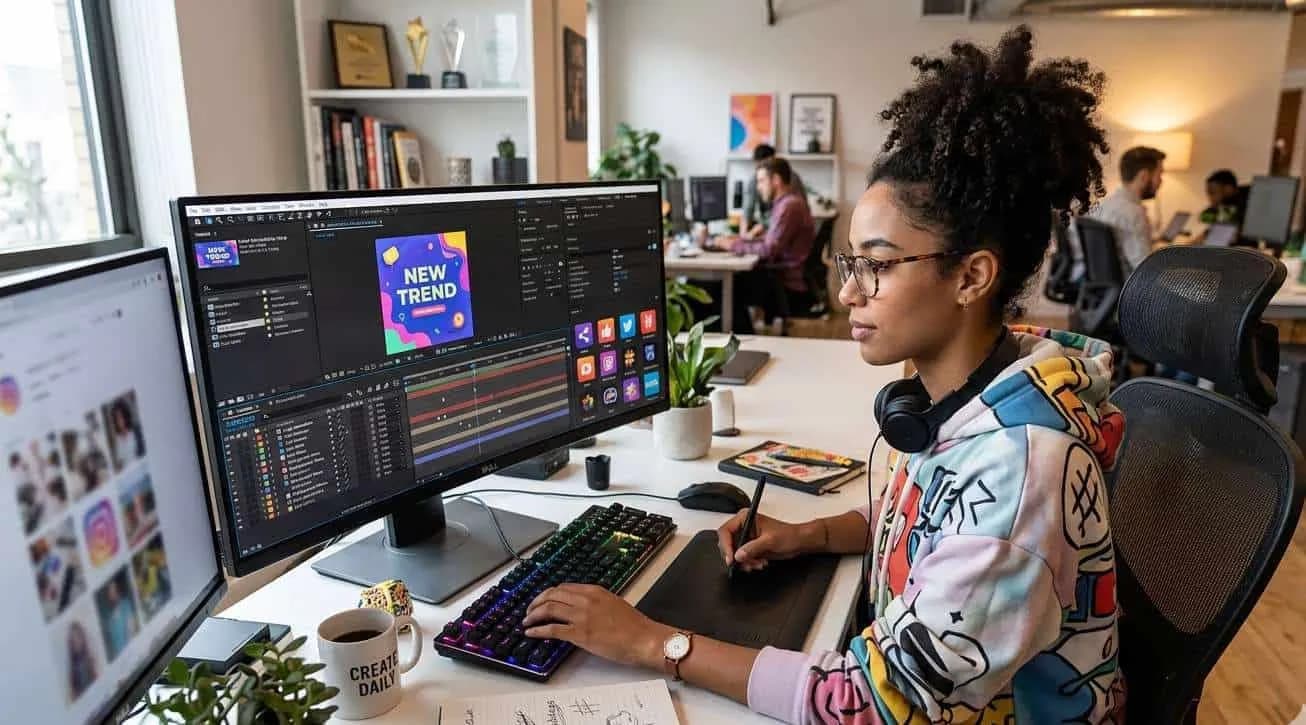
Social media feeds are more crowded than ever, and static images are no longer enough to capture attention. Animated graphics for social media have become one of the most effective tools for brands, creators, and marketers to stop the scroll. Understanding how to use them correctly can be the difference between content that gets noticed and content that gets ignored.
Why Animated Graphics Outperform Static Content
The human brain processes motion faster than any other visual stimulus. When a user scrolls through a feed, a moving graphic registers in the peripheral vision before a static one does. This biological advantage gives animated graphics a measurable edge in organic reach and engagement rates.
Studies in digital marketing consistently show that animated content generates higher click-through rates compared to still imagery. Platforms like Instagram, LinkedIn, and TikTok have each updated their algorithms to favor content that keeps users engaged longer. Animated graphics naturally extend the time a viewer spends on a post, which signals value to the platform and expands distribution.
Beyond the algorithm, animation communicates tone and brand personality in a way that static images simply cannot replicate. A well-designed animated logo or product reveal communicates professionalism, creativity, and attention to detail. These impressions are formed within the first few seconds of viewing, making the quality and intent of the animation critically important.
The Different Types of Animated Graphics You Should Know
Not all animated graphics serve the same purpose, and choosing the right format for each platform and goal is a foundational skill. The most common formats include GIFs, animated PNGs (APNGs), Lottie files, and short looping video clips saved as MP4s. Each has distinct file size characteristics, compatibility ranges, and visual quality ceilings.
GIFs remain widely used due to their universal browser and platform support, but they come with a significant limitation in color depth, capped at 256 colors per frame. Lottie files, which are JSON-based animations rendered from vector data, are increasingly popular for web and mobile applications because they scale without quality loss. MP4 clips offer the highest visual fidelity and are the preferred format on Instagram Reels, Facebook, and LinkedIn.
For brands that want to maintain visual consistency across platforms, understanding which format to use on which channel is not optional. Posting a GIF on a platform that converts it to a low-quality video loop undermines the effort invested in the original design. Knowing the technical specifications of each major platform ensures that the animation renders as intended.
Key Principles Behind Effective Animation Design
Effective animation is not about movement for the sake of movement. Every animated element should serve a clear communicative purpose, whether that is directing the viewer’s eye, reinforcing a brand message, or illustrating a concept that words alone cannot capture. Purposeless animation creates visual noise and reduces the credibility of the content.
Timing is one of the most critical and often overlooked elements of animation design. An animation that moves too quickly loses its communicative value, while one that moves too slowly tests the patience of a social media audience accustomed to rapid content consumption. The optimal duration for most social media animations falls between one and six seconds, with seamless looping preferred for feed-based placements.
Color, contrast, and typography within animated graphics must also be held to the same standards as static design. High contrast between text and background ensures readability even on small mobile screens. Font choices should align with the brand’s visual identity and remain legible even during motion, which often requires using heavier font weights than one would use in a static graphic.
How Artificial Intelligence Is Transforming Animated Graphic Creation
The rise of artificial intelligence in graphic design has fundamentally changed who can create high-quality animated graphics and how quickly they can do it. What once required a trained motion designer with industry-standard software can now be initiated by a marketer or small business owner using AI-assisted tools. This democratization of design capability is one of the most significant developments in content marketing.
AI tools can now generate animation paths, suggest timing curves, and even produce entire animated sequences from a text prompt or a static image. Using an image generator using AI is one practical starting point for creating the base visuals that can then be brought to life through animation. The combination of AI-generated imagery and AI-assisted animation represents a new production workflow that dramatically compresses the time between concept and publication.
The integration of AI into the animation pipeline also enables more consistent output across large volumes of content. Brands that need to produce animated graphics at scale, such as e-commerce companies running frequent promotional campaigns, benefit enormously from AI-assisted production. Consistency in visual style, pacing, and branding across dozens of animated assets is now achievable without a proportionally large design team.
What Platforms Reward and What They Penalize
Understanding platform behavior is as important as understanding design principles. Each major social media platform treats animated content differently, and ignoring these differences leads to wasted creative effort. Here is a breakdown of what the most important platforms currently reward:
- Instagram prioritizes Reels in its discovery feed, meaning animated content formatted as vertical video (9:16 ratio) receives broader organic distribution than square or landscape animations.
- LinkedIn favors native video uploads over external links and rewards content that generates meaningful comments, making animated graphics that pose questions or present data especially effective.
- Facebook rewards longer view times and shares, which means animations that tell a mini-story within five to ten seconds tend to outperform simple product graphics.
- X (formerly Twitter) performs well with looping GIFs and short MP4 clips, particularly those that deliver a punchline or key message in the first two seconds before the viewer scrolls past.
- Pinterest is increasingly video-friendly and rewards animated graphics that match its vertical format and discovery-oriented user behavior, particularly in the home decor, fashion, and food categories.
- TikTok heavily favors native video with sound, and while animated graphics can perform there, they tend to work best when combined with trending audio or used as supporting elements within a larger video.
The Role of Automated Tools in Scaling Animated Content
Producing animated graphics at scale requires a system, not just a skill set. Automated graphic design tools have made it possible for marketing teams to maintain a consistent output of animated assets without relying entirely on manual design work. These tools allow users to define brand parameters once and then generate on-brand animations repeatedly with minimal manual input.
Template-based animation systems have become particularly sophisticated. They allow designers to build a master animated template and then populate it automatically with new text, images, or color schemes for different campaigns. This approach ensures visual consistency while reducing production time by a significant margin.
For organizations evaluating which tools to incorporate into their workflow, exploring a comprehensive list of AI tools website is a practical starting point. The landscape of AI-powered design tools is evolving rapidly, and understanding the full range of available options allows teams to make informed decisions about which platforms align with their specific content goals and technical requirements.
Measuring the Impact of Your Animated Graphics
Creating animated graphics is only half of the process. Measuring their performance against clear metrics determines whether the investment in animation is producing real business results. The most relevant metrics differ depending on the platform and the campaign objective, but certain indicators apply across the board.
Completion rate, which measures how often a viewer watches the entire animation, is a strong signal of content quality and relevance. A low completion rate suggests that the animation either fails to capture attention quickly enough or loses the viewer before delivering its core message. Tracking completion rate alongside click-through rate provides a clearer picture of both creative effectiveness and audience intent.
Comparing the performance of animated graphics against static posts over a consistent time period is the most direct way to build an evidence-based case for continued investment in animation. A/B testing animated versus static versions of the same message, targeted at the same audience segment, generates data that removes assumptions and reveals what actually drives engagement for a specific brand and audience.
Final Thoughts
Animated graphics for social media are not a trend that will fade as quickly as it arrived. They represent a fundamental shift in how audiences consume and respond to content in an environment built around speed and visual stimulation. Brands that develop a disciplined, informed approach to animated content will hold a compounding advantage over those that continue to rely on static imagery alone.
The most successful animated graphics combine purposeful design, platform awareness, and smart use of emerging tools to deliver content that is both visually compelling and strategically effective. As AI continues to reshape what is possible in design and automation, the threshold for what constitutes professional-quality animated content will continue to rise. Starting now, with the right knowledge and the right tools, is the most strategic move any content-focused team can make.
Related Articles
Unlock Your Creativity: Top AI-Powered Design Tools for Marketers
In a world where attention spans are shorter than a TikTok video, the need for creativity in marketing and design is more crucial than ever. Enter AI-powered…
Read more
Create a Flyer with AI: Step-by-Step Guide for Marketers
Creating a flyer with AI has become a game-changer for marketers and business owners alike. Imagine having a design assistant that never tires, always knows …
Read more
Why Artists Love a Lossless Image Optimizer
A lossless image optimizer helps artists and photographers enhance image quality without sacrificing detail. Discover how this powerful tool improves performanc…
Read more